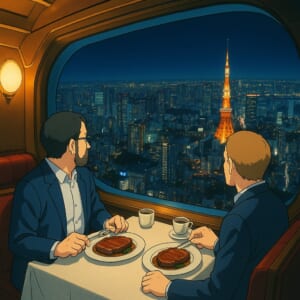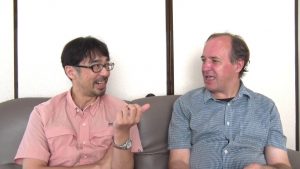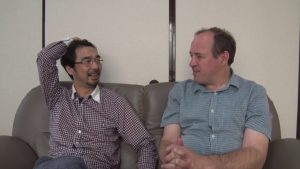
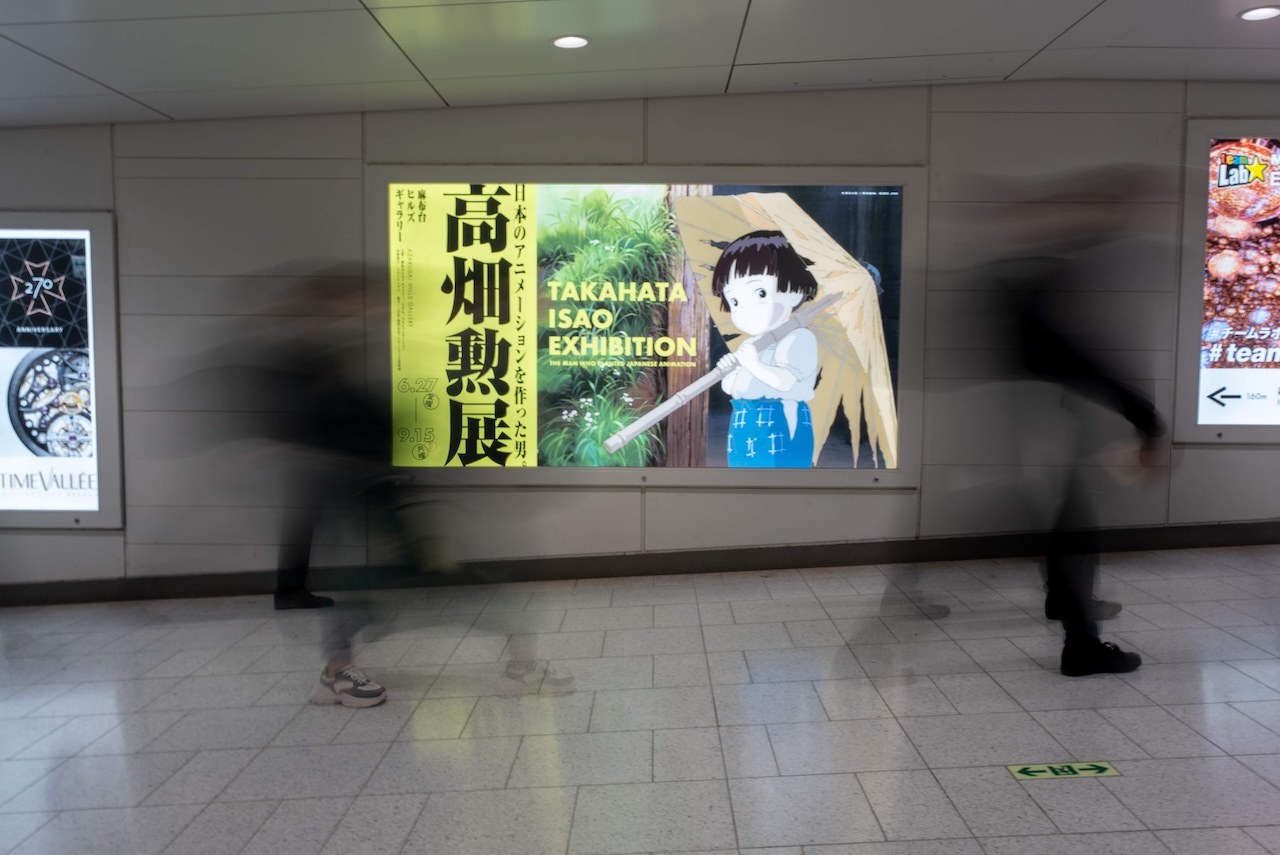
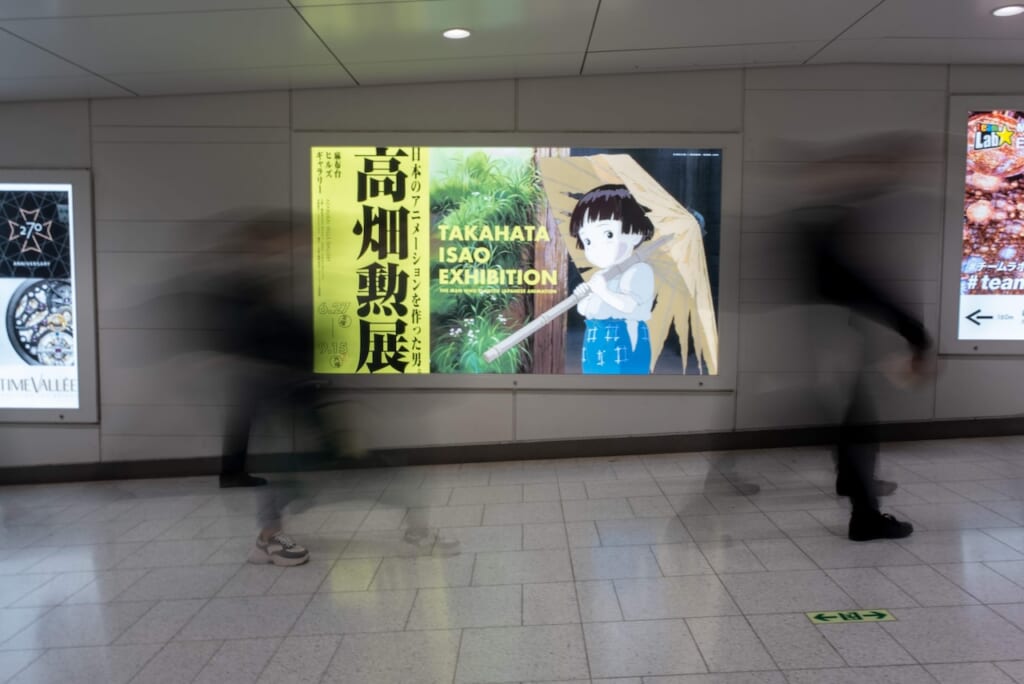
We recently went to the Isao Takahata Exhibition in Tokyo to report on it for Animation World Network (our report is here). As fans of Takahata’s work, we had a great time talking about the shows we grew up with—like Anne of Green Gables, Heidi, and 3000 Leagues in Search of Mother. The exhibition brought back a lot of memories and got us thinking about how Takahata’s storytelling and visual style have stayed with us over the years.
 ANDREW
In America and Britain, Takahata is most famous for his films Grave of the Firefllies and Princess Kaguya. Do you know any of his other works?
 CARLOS
Of course! There’s also “3000 Leagues in Search of Mother” and “Anne of Green Gables.”
ANDREWDid you watch these when you were a child?
CARLOSI watched a little bit of them, but I never saw them all the way through. I actually watched “Anne of Green Gables” in its entirety quite recently, and I was really moved by it.
ANDREWThat’s very interesting, because I think it’s a full 50 episodes, and it’s based on a single book.
CARLOSI haven’t actually read the original book, so I’m not entirely sure, but from what little I have read of the original, I feel that Anne’s character and personality are depicted quite well.
CARLOSAnne is a girl who talks a great deal, and I’ve come to think—only after becoming an adult—that this trait of hers might actually reflect a psychological condition often seen in children who grow up in institutions or similar environments. Looking at it from that perspective now, I find myself quite surprised and impressed at how well they captured and expressed that aspect of her personality.
ANDREWYes, when I watched Anne, I only got through about the first 20 episodes, but what struck me was the way the perspective shifted between Anne—overflowing with imagination and passion—and her adult guardian Marilla, who is much more grounded and often worried or confused by this unusual girl. That switching of perspectives felt very characteristic of Takahata’s style of storytelling—something he seemed to really favor.
CARLOSI felt that it clearly depicted the scenes where Marilla actually dislikes Anne, and I thought it did a great job of portraying those less pleasant, more uncomfortable aspects of human emotions.
ANDREWAnd on a lighter note, I remember one of the earlier episodes where Anne and her friend Diana are playing together in the woods. They imagine fairies and picture the White Rabbit from Alice in Wonderland, just having fun in their own fantasy world. The way that scene is depicted feels a bit like Miyazaki’s Totoro. And Miyazaki was involved with Anne for a time—up to around episode 15. So I wonder if Anne might have also served as some kind of inspiration for him in those early episodes.
CARLOSWhen I think of Takahata’s works, what comes to mind is “Marco” (3000 Leagues in Search of Mother), where there were quite a few avant-garde and artistic expressions. Looking back now, I realize that they were really experimenting with visual expression itself, almost like a kind of visual experimentation in storytelling. Kind of like De Chirico, in a way.

The sky looks ominous…
CARLOSLet’s talk about the exhibition. It was really raining hard that day we visited, wasn’t it?
ANDREWYes
CARLOSYou must got completely soaked.
ANDREWI bought an umbrella from a convenience store and about two minutes after I bought it, it was already broken by the wind.
CARLOSSo that is why you came by Nekobus!
ANDREWTakahata would be very annoyed by that answer. He would complain, why does every conversation about his work have to mention something by Miyazaki?
 CARLOS
You could have stayed dry if you had come from Kamiyacho subway station, you know.
ANDREWYou should’ve told me earlier!
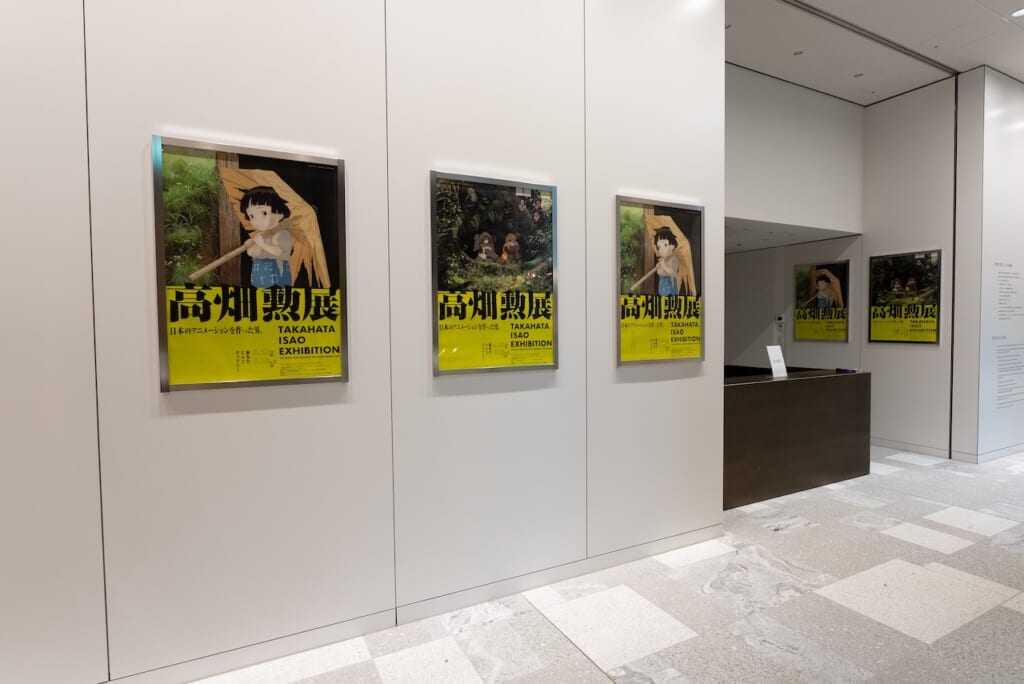
CARLOSHow was the exhibition?
ANDREWI really enjoyed it.
 CARLOS
Which part would you most like to recommend to people?
ANDREWI would recommend the section on his 1970s television work, because it represents a very important part of his career. These 1970s works—Heidi, Girl of the Alps, 3000 Leagues in Search of Mother, and Anne of Green Gables—weren’t broadcast in the U.S. or the U.K., so many people in the West don’t really know about them. But they were hugely significant in Takahata’s career and played a major role in shaping his achievements. I think it’s important to understand just how impactful those series were.
CARLOSWhen I was a child, I used to watch Heidi a lot, and there’s a scene where Heidi goes to Frankfurt as a companion, and she’s carefully storing bread in her dresser. My older sister actually used to imitate that, And whenever my sister would bring food back from somewhere and store it up, we would call that “Heidi.”
ANDREWThat’s a lovely story. But if I remember correctly, in the series, the adults eventually pointed out that if you keep the bread in the drawer for too long, it will go bad.
CARLOSAll the food just looked so delicious, and I really admired the idea of making and eating things like cheese. By the way, since I’m from Hokkaido, I’m quite used to snowy mountains, but even so, there’s something about the image of those Swiss snowy mountains that gives me a sense of nostalgia or a kind of warmth.
ANDREWOne scene I remember from Heidi is when she’s in Frankfurt and goes up to the attic. There are religious paintings up there—images of mountains and a shepherd—and by that point, Heidi is overwhelmed with homesickness. She begins to hallucinate, seeing the goats, Peter, and her grandfather. She starts shouting to them, running around in circles, and eventually collapses on the floor. It’s a really intense scene—almost frightening—and it vividly depicts a kind of mental breakdown.
CARLOSOh no, I feel like I might start crying just remembering it. It’s not because it’s scary; it’s just that I’m so moved by the sight of a child trying so hard. At this age, I end up watching it from a parent’s perspective, you know, since I have a daughter, I just naturally see it from the standpoint of a parent.
ANDREWYes, of course, Takahata did similar things in his other works as well. At the beginning of 3000 Leagues in Search of Mother, Marco’s mother departs on a ship. As the ship begins to leave, Marco runs toward it, crying out, “Mama, come back!” It’s an incredibly emotional scene—I remember being really struck the first time I saw it. It’s deeply moving and unforgettable.
CARLOSTakahata sure does treat the children in his anime quite harshly, doesn’t he?
ANDREWI’ve watched all of Heidi, but I still haven’t finished 3000 Leagues in Search of Mother or Anne of Green Gables, so I’m really looking forward to watching them all the way through someday. Both times, I got partway in, then got distracted by other work and never made it to the end. So I’d really like to go back and properly finish them.
CARLOSBack when I was a child, I would watch these stories set in foreign countries without finding it strange at all, but in his later years, Takahata began to focus on themes related to Japan and worked on how to approach Japanese animation from that perspective.
ANDREWAs you rightly say, in the 1970s, he was making all these stories in other countries. And then from the 1980s, really, he starts focusing completely on Japan, whether it’s Gauche the Cellist, which is based on a Kenji Miyazawa story, or Jorinko Chie, which is set in downtown Osaka, a comedy, and then all his Ghibli films, which are set in Japan, I think. For example Omoide Poroporo (Only Yesterday), which is about a young woman who lives in Tokyo, but who finds it spiritually uplifting to go into the countryside and pick flowers and experience farming life. These are things that interest foreigners, but I also find it very intriguing the way that Takahata switched completely from foreign countries to Japan, even before Miyazaki did. Miyazaki set some of his later movies in Japan, like Totoro and Mononoke, but Takahata was there first.
CARLOSI actually had a copy of the Jarinko Chie comic book, and I used to read it often. Since it’s set in Osaka and I’m from Hokkaido, the worlds were completely different—it was almost like a foreign country to me. And there was also an anime at that time, right? I remember feeling a certain sense of familiarity because ordinary Japanese comedians who were well-known would also be working as voice actors. At that time, manzai was really booming, so it definitely left an impression that some rather popular comedians from Osaka were doing the voice acting.
ANDREWI understand that Takahata’s film is connected to the TV series. I’ve seen a few episodes of the show, and in the earlier ones, there are scenes that are directly reused from the film, along with others that are completely new. As I mentioned in my article for Animation World Network, it’s unclear how much Takahata himself was involved in the TV version, but he definitely directed the film.
CARLOSAs Studio Ghibli grew more and more famous, Takahata ended up choosing something like My Neighbors the Yamadas as a theme, but at that time, I remember thinking, “Why the Yamadas, all of a sudden?” As a child, I somehow had a certain sense of the direction that Ghibli was taking, but when a story depicting such a realistic, everyday kind of life came along, it just didn’t quite resonate with me as a kid.
ANDREWMy Neighbors the Yamadas was released in Japan after Princess Mononoke, and it was one of the least commercially successful Ghibli films. So I think a lot of people may have had a reaction similar to yours. But I believe Takahata wanted to make it clear that he was a very different kind of creator from Hayao Miyazaki, with his own unique vision. Personally, I like Yamada-kun, though I must admit that I had a hard time getting used to its rhythm as a film. Especially when watching it in the theater, the pacing can feel a bit tricky. That said, I really enjoy the music and the characters, and I especially love the dog in that movie. There are quite a few elements in it that have stayed with me.
CARLOSFrom that time on, it seems that Takahata also began to change the very way he created animation, using imagery reminiscent of soft watercolor paintings. And that approach ultimately culminated in “The Tale of the Princess Kaguya.” In fact, even in his earlier works, like “3000 Leagues in Search of Mother,” Takahata was conducting various visual experiments. I feel like he continued to repeat and refine these experimental approaches in the works he created toward the end of his life as well. I think those aspects were also quite well expressed in this exhibition, don’t you think?
ANDREWYes, definitely—this exhibition highlights how much Takahata was influenced by the Canadian animator Frédéric Back. Back is best known for his masterpiece The Man Who Planted Trees, and even the title of this exhibition—”Isao Takahata: The Man Who Planted Trees in Japanese Animation”—reflects that influence. You can really feel Frédéric Back’s touch in some of Takahata’s works, like My Neighbors the Yamadas, The Tale of the Princess Kaguya, and even parts of Only Yesterday. His style sets his films apart not only from Miyazaki’s but from most other anime as well. But interestingly, there are moments that feel like Takahata and Miyazaki almost swapped sensibilities. For example, the flying scene near the end of Princess Kaguya, accompanied by Joe Hisaishi’s music, has a tone that feels very much like a Miyazaki film. On the other hand, Miyazaki’s film The Wind Rises, released around the same time, features an objective portrayal of its main character, an designer of warplanes — Takahata often emphasized objectivity as a core principle. So even in the 2010s, the two masters continued to influence each other, and it almost feels like they switched roles for a moment—which is really fascinating.
CARLOSThat wrapped up nicely, didn’t it?
ANDREWIndeed.
CARLOSThere’s actually a huge amount of material at the exhibition, and if you try to read all the documents properly in Japanese, it’s a considerable amount. So if you really take your time to look at the exhibition, it’ll take quite a while, and you’ll probably end up exhausted, with your mind going completely blank, right?
ANDREWAbsolutely.
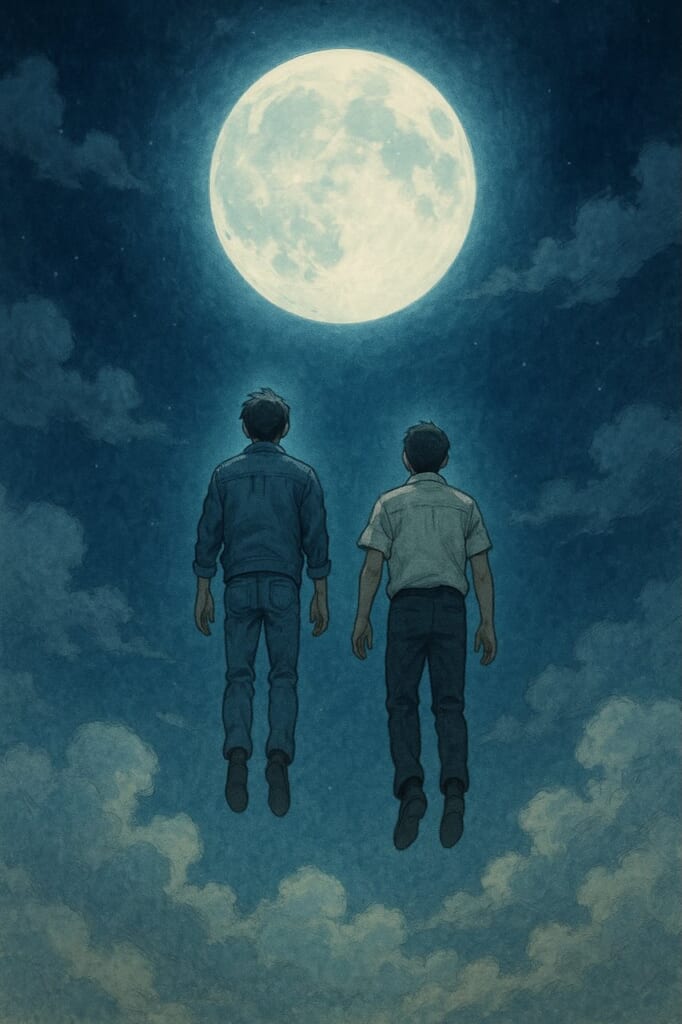
CARLOSAt a time like that, wouldn’t you end up completely losing consciousness and returning to the moon?
ANDREWMaybe!