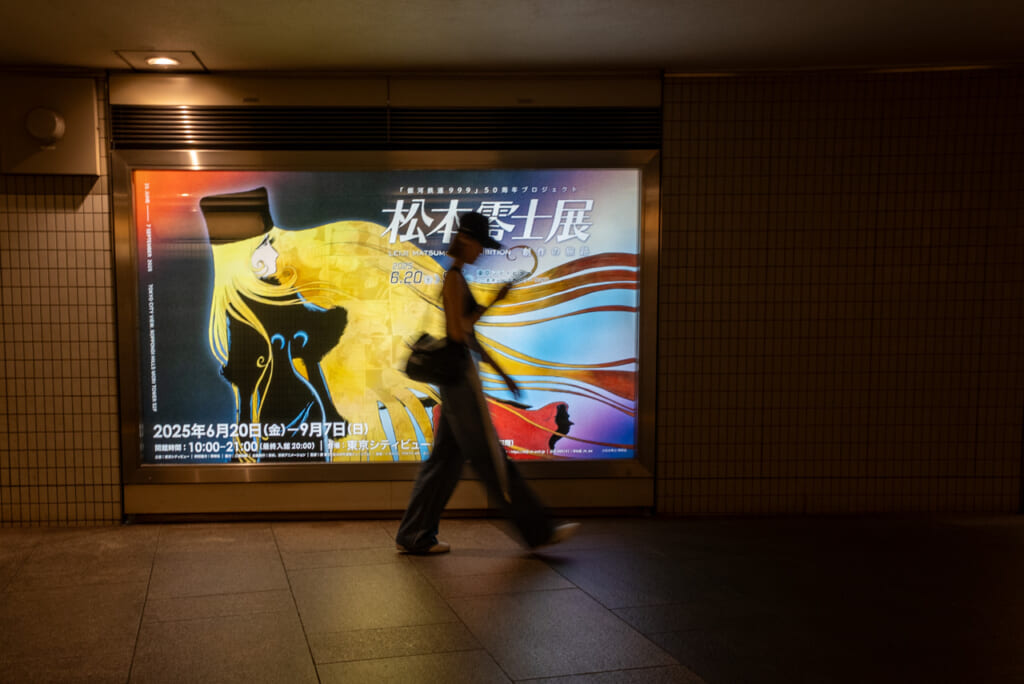
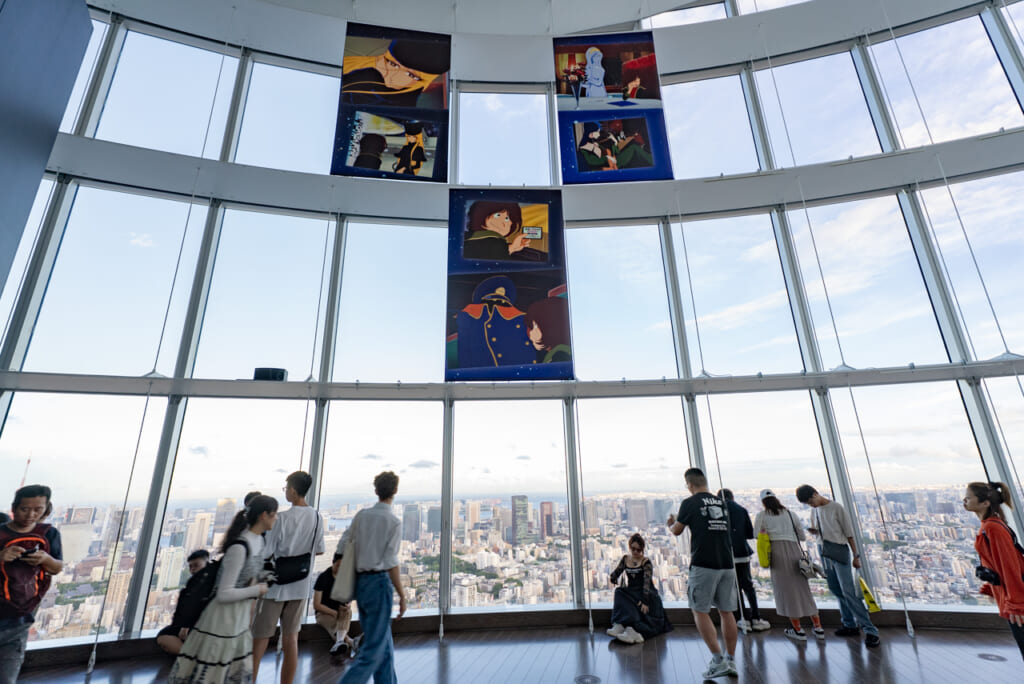
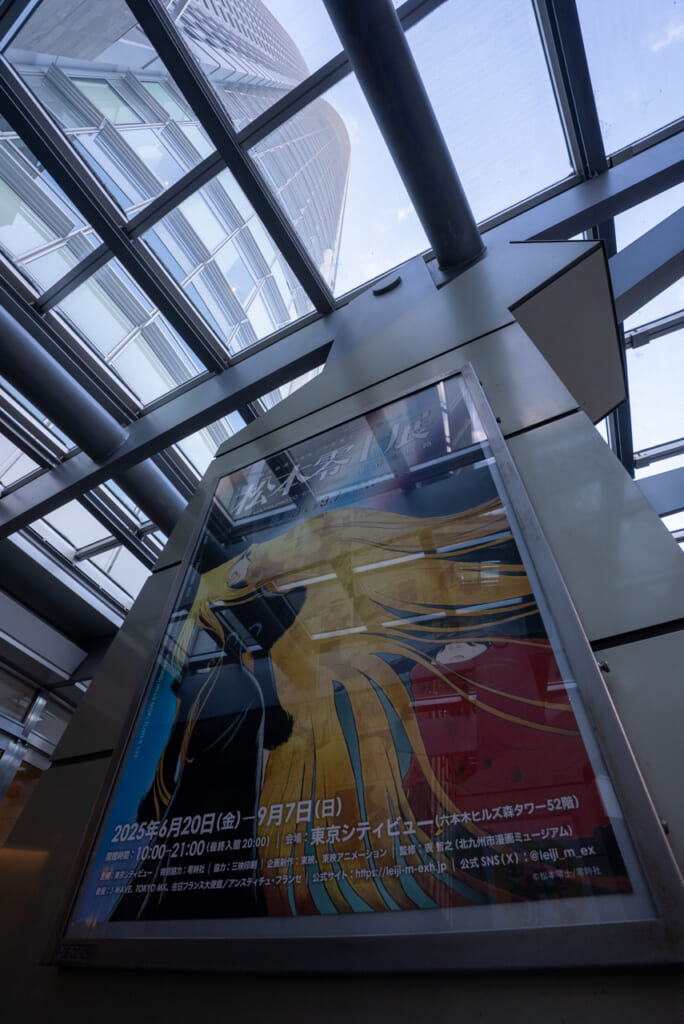
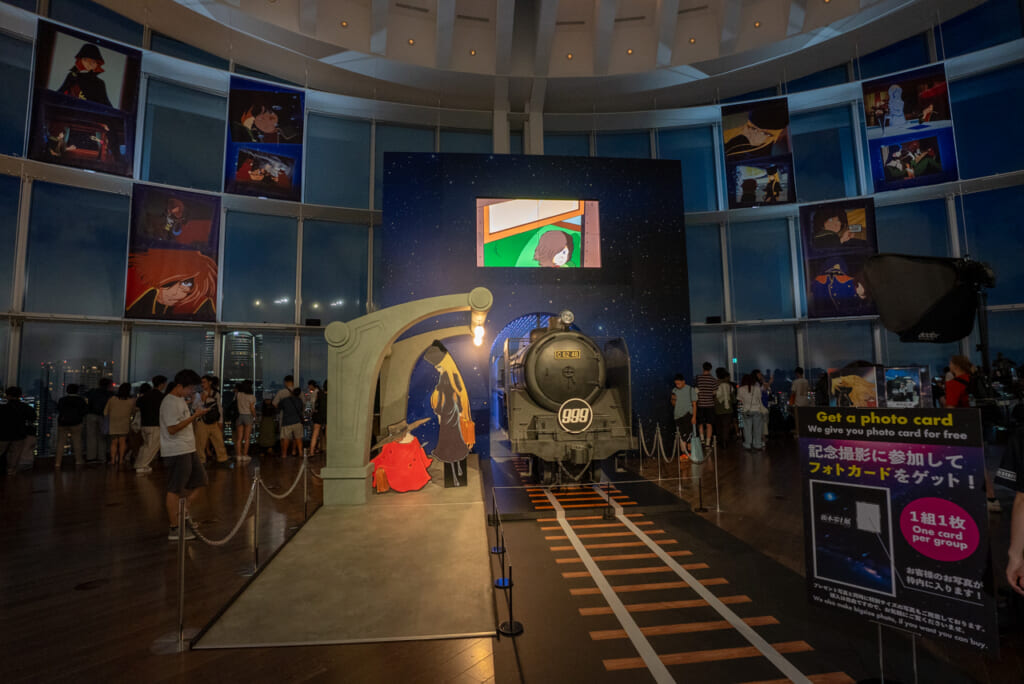
We’ve been to the Leiji Matsumoto 50th anniversary exhibition in Roppongi, which Andrew wrote up as a report for Animation World Network, illustrated by Carlos’s photographs. We also enjoyed the experience of a meaty Matsumoto meal fifty-two floors above Tokyo. Later, we chatted about Matsumoto’s extraordinary body of work, and especially Galaxy Express 999 – remember, the name is pronounced three-nine – which Carlos remembers from childhood. Read on!
What Leiji Matsumoto Means to Us
 ANDREW
We’ve just been to the Leiji Matsumoto exhibition in Roppongi, so we’re talking about his work today. Of Matsumoto’s works, I know that Carlos has a special fondness for “Galaxy Express 999,” which has been adapted in anime more than once. Carlos, which version did you see?
 CARLOS
I watched it on TV first, I think, and I also read the manga. I don’t think I saw the film in the cinema back then, though I’ve seen it several times since.
ANDREWI see.
 CARLOS
It was on TV every week, airing at night once a week. And little by little, the characters would travel from one star to another, all sorts of different planets one after another. It took about a year on TV, and I really felt like I was traveling along with them.
ANDREWA child’s first space odyssey.
CARLOSThat kind of experience really belonged to an era when TV was the only option, and you’d look forward to it every week and at the same time feel like you had to keep watching it. It’s probably an experience you can’t have nowadays.
ANDREWDo you remember around what time it was broadcast?
CARLOSIt was around seven in the evening. So it might have been while we were having dinner in the living room, or maybe right after, but in any case we were just glued to the screen.
ANDREWI see.
CARLOSI remember trying to record the title song onto a cassette. I’d bring a cassette recorder in front of the TV, press the button to start recording with that little “clunk,” and capture the sound coming out of the speakers straight onto the recorder. I’d hold my breath and keep absolutely quiet during the recording. I have those memories of doing that kind of “aircheck.”
ANDREWDid you watch it with your whole family?
CARLOSI think we were all watching together—my two older sisters and my parents.
ANDREWYour whole family.
CARLOSMy father’s name was actually Tetsuro, like the boy in the series.
ANDREWThe boy in the TV version wasn’t especially cool. Did your father mind that?
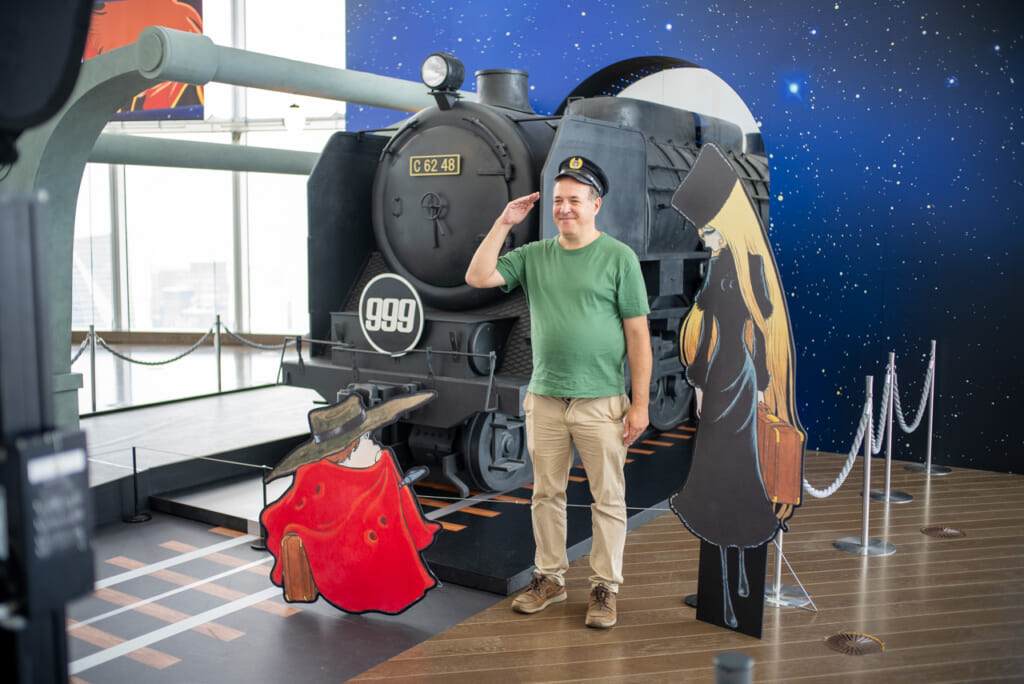
This illustration of Tetsuro is based on Manga and TV series.
CARLOSExactly. the boy in the TV version had this sort of potato-like face, so my dad used to complain about that. But when it came to the movie version, he looked cooler, so I guess that kind of made up for it.
ANDREWAnd your father.
CARLOSAnd my father was satisfied with his new appearance.
ANDREWHe was happy.
And your mother.
Maetel?
CARLOSNo, that is not Japanese name.
ANDREWYes, actually, I think a part of the movie version was being shown at the exhibition today as well, and I noticed that in that version, the boy looks a bit more handsome. Do you happen to know why that is? Why was his design changed to make him look cooler?
CARLOSIn an interview, the film’s director Rintaro mentioned that Tetsuro’s age was set a little older than in the original manga and the TV anime. That made him look cooler, and I think children at the time accepted it quite naturally.
Back then, television was mighty.
ANDREWThinking back to the TV version, do you remember what shows were broadcast before and after it? What was the lineup like back then?
CARLOSI think there was probably a news program around 6 p.m. in the evening. And then from about 7 o’clock, there would be some kind of variety show, or maybe a special documentary-type program, or a music show. So I remember that from about 7 to around 9 p.m., each TV station generally aired entertainment shows. And I remember that airing anime was just one part of that whole lineup.
ANDREWWas it on the weekend or a weekday?
CARLOSI think it might have been a weekday, but I’ve forgotten.
ANDREWWhen you were a kid, did you ever have to miss an episode, if you were out or got home late?
CARLOSYeah, it happened, but I didn’t really mind at all. I mean, it was on for a whole year, so missing an episode or two didn’t bother me at all. Back in the day, TV series were long. Nowadays if you miss a single episode, there are lots of anime where you can’t follow the story anymore, but back then it was no big deal.
ANDREWThe TV version of Galaxy Express 999 is available on a website called Crunchyroll in America (though unfortunately not in Britain). If you were speaking to American viewers starting the series for the first time, how would you describe it?
CARLOSThe art style is different — it’s not the same as modern manga, so it might feel a bit harder to get into at first. But Galaxy Express 999 is definitely the kind of work that makes you feel like you want to stay in its world forever. Maybe it’s similar to what Star Wars fans feel — they love that universe, and that makes them want to remain there. I think 999 gives you that kind of experience.
ANDREWThat was also one of the reasons why the first Avatar movie was so popular— people wanted to stay on Pandora.
CARLOSYou ride the train and feel like you’re traveling endlessly. In each episode, you arrive at a planet, something happens there, you face an accident or event, solve it, and then, just in time, you get back to the train. That moment of relief — “ah, I made it back” — repeats again and again. While I was watching, I really wished the journey would never end. For people who get hooked, I think it’s that kind of experience.
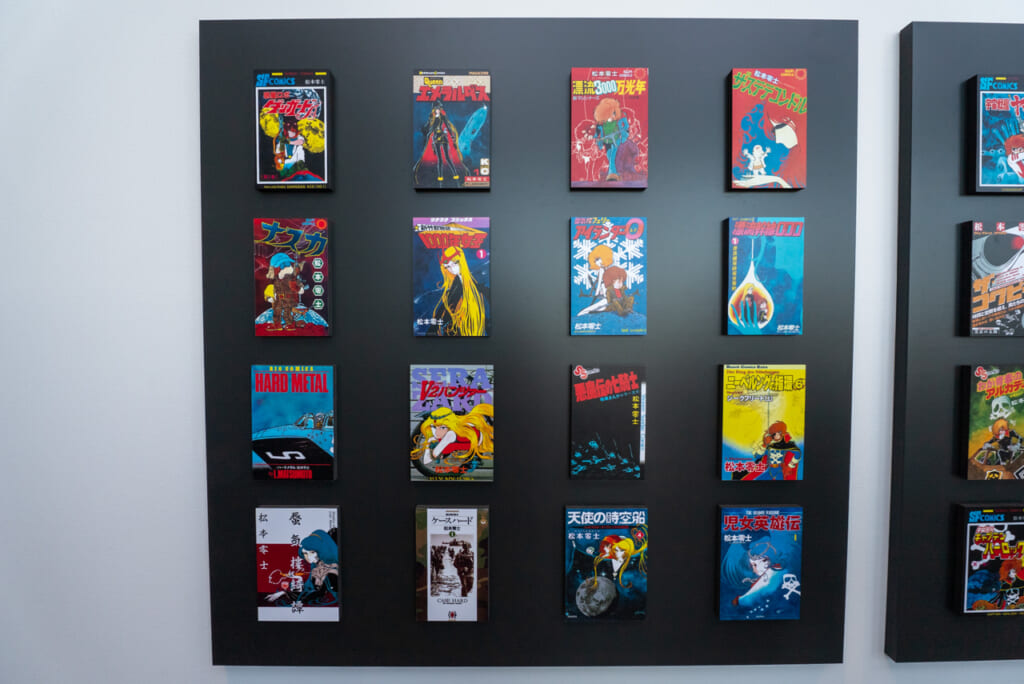
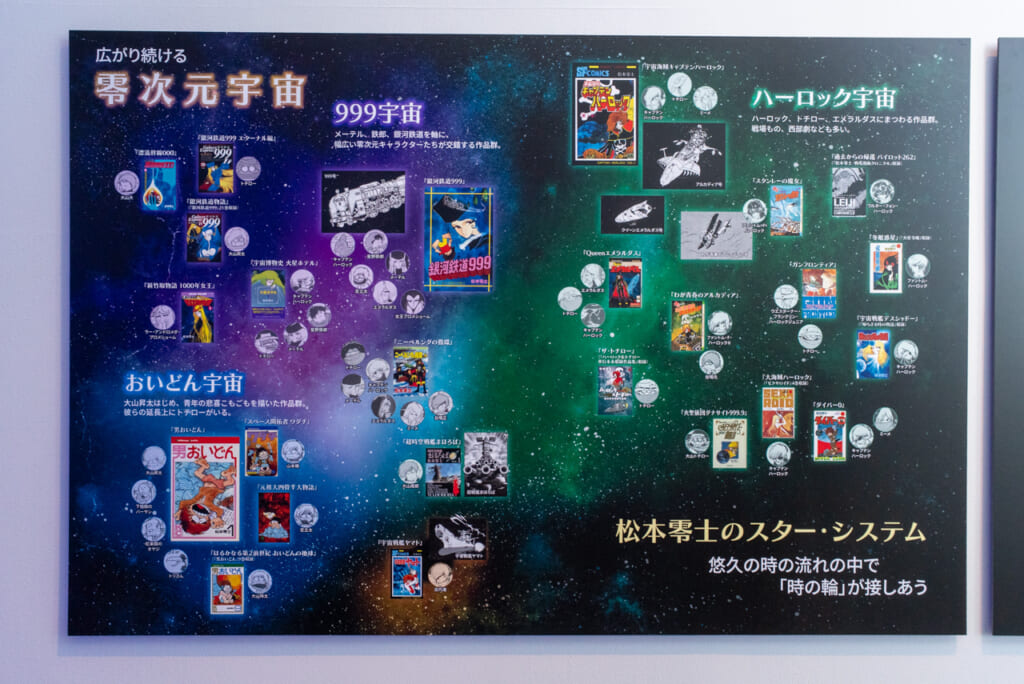
Matsumoto Saga. Wide spreading world of Matsumoto’s works.
CARLOSI went on a bit—since I love it, I kept talking.
ANDREWYou’re very welcome. I could really feel your love for 999.
 ANDREW
Which other Matsumoto work would you recommend to someone new to him?
CARLOSIt’s a standard choice, but I’d go with Yamato.
ANDREWYou recommend Yamato.
CARLOSYou know, when I think about it now, Yamato is such an extremely Japanese kind of story. It feels a bit strange in that sense. I wonder how people overseas think about it when they see it, since even the name “Battleship Yamato” comes directly from a Japanese battleship.
ANDREWBut many overseas viewers might not even realize that “Yamato” is the name of a battleship. It’s similar to how many people don’t know that the girl Mikasa from Attack on Titan was named after the famous battleship Mikasa.
CARLOSIt’s something military otaku know.
ANDREWBut for American fans, Yamato was a very important work because it was broadcast in the 1970s as Star Blazers. Personally, I didn’t watch the 1970s version, but I did watch the CG remake which began around 2010. I enjoyed that a lot — I’ve seen one and a half seasons, and it was really entertaining.
CARLOSStar Blazers… Strange name.
ANDREWFrom a Western perspective, people might see Yamato as something closer to Star Trek or even Battlestar Galactica, which is about characters from another planet, having lost their home, traveling through space in search of Earth. I think Yamato could be received as that kind of space adventure tale.
CARLOSOne aspect of Yamato that I thought of as quite “local” is the mentality of the crew. Since it was a work from the 1970s, you had older generations who still remembered the war, and younger generations whose parents had lived through it. So that mindset—things like self-sacrifice, the idea of risking oneself for the sake of all humanity—feels like it reflects a kind of wartime spirit.
ANDREWI understand.
CARLOSAnd I think there’s a very Japanese sense of values embedded in that, especially in the early trilogy. So I’m honestly curious how that kind of mindset is received by people overseas.
 ANDREW
Yes, that’s a very interesting perspective. I don’t know if that was downplayed in the American version, but in America’s Star Trek there’s a famous line about “the needs of the many outweighing the needs of the few or the one,” which highlights self-sacrifice. Though the character who sacrifices himself came back to life very quickly!
CARLOSI have seen a little of the original 1960s Star Trek, but I only know about the BL relationship between Kirk and Spock.
ANDREWWhat’s interesting, though, is that a more recent Japanese film, Godzilla Minus One, seemed to push back against that kind of self-sacrificial attitude. The story is about a kamikaze pilot who does NOT die for his country. I feel that reflects a very different set of values, compared to the era when Yamato was first created.
The shift in dramaturgy
CARLOSYes, exactly, the new Godzilla took a different approach compared to the older stories. And in Yamato, they really did depict a lot of self-sacrifice, and in those early series, people just kept dying one after another. It really had that wartime kind of feeling where characters would die off, something that’s harder to imagine in the same way nowadays.
ANDREWTomino did similar things, off course.
CARLOSThe new Godzilla took a different approach. Early Yamato felt like wartime drama where people died one after another; hard to imagine nowadays.
ANDREWYes.
CARLOSBut then again, there are also characters who come back, like Captain Okita. I mean, at the end of the first movie, “you clearly died, right?
“
—that’s confusing.
ANDREWThe miracle return!
CARLOSIn Matsumoto’s works, consistency often doesn’t line up between series.
About the exhibition.
 ANDREW
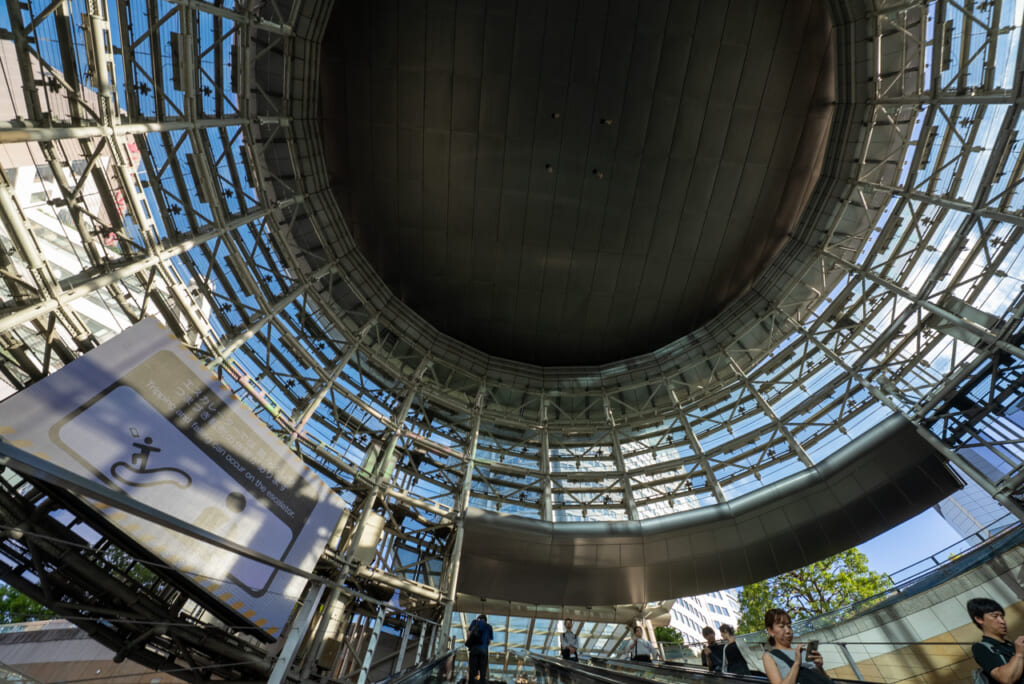
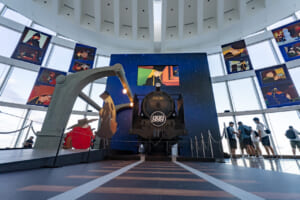
Okay, so when you went to the Roppongi exhibition, did you learn new things about Masumoto that changed your perspective on him?
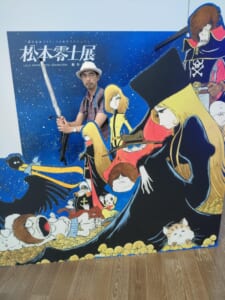
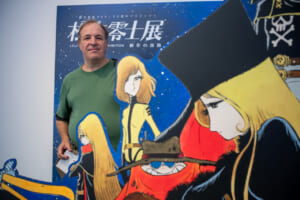
CARLOSI guess it felt like it was exactly what I expected. Like, “Ah, so this is the kind of person Leiji Matsumoto is,” and it matched what I had in mind. Maybe that just means the exhibition was really well put together.
 ANDREW
I am glad you felt that.
CARLOSIt really made me realize that there are still so many of his manga works I don’t know yet—just seeing the covers made that clear. And yeah, it’s true that some of his most famous works stand out so much that they kind of overshadow the rest.
ANDREWAmong Western fans, one of the most familiar Matsumoto anime is Daft Punk’s ‘Interstella 5555.’ Was it popular in Japan, and what do Matsumoto fans think?
CARLOSWere the Daft Punk videos also made into a movie?
ANDREWIn the West, the separate music videos were compiled into a feature called ‘Interstella 5555,’ wich was shown in cinemas. I saw it in London.
CARLOSWhen I first saw it, I wondered why Leiji Matsumoto’s art style was in a Daft Punk work. I think many people just thought, ‘Oh, it’s like a Leiji Matsumoto manga,’ without thinking much about it.
Prospects for the Matsumoto world in the years to come
 CARLOS
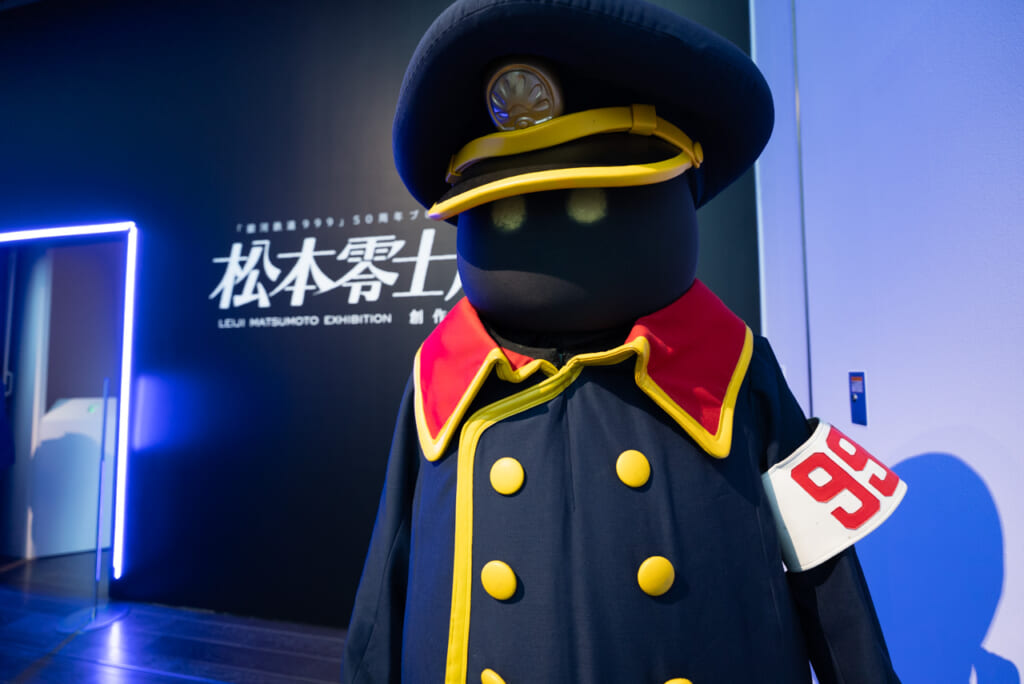
When Matsumoto was alive, I used to feel uneasy whenever a new 999 came out, not knowing where the story might go. But now that I realize there will never be a new one again, I feel an even deeper sense of sadness.
ANDREWDo you think other creators could reimagine a work like 999 in a meaningful way?
CARLOSThat’s an interesting question. I mean, for example, Gundam has been written by various creators, right? But somehow I feel like Leiji Matsumoto’s works just aren’t like that, and I’m not really sure why.
ANDREWRecently, it was reported that Hideaki Anno and his studio Khara would be involved with a new project based on Yamato. At the moment, there are no concrete details, but Anno is clearly a big fan of Yamato. Are you looking forward to seeing his take on Yamato?
CARLOSIt worries me a bit.
ANDREWWhy?
CARLOSIf the protagonist is mentally troubled and on a battleship, that’s concerning from a civilian perspective. And the captain is authoritarian, yelling ‘Launch the ship, anyway!’ right?
ANDREWCaptain Gendo, in other words.
CARLOSAnd “If you’re not going to launch it, then get off the ship!” or something along those lines, right?
ANDREWIt could be like Nadia: that had a kid with serious psychological issues; a professional crew who’ve seen hard things; a special link between a kid and the captain—that kind of dynamic could be interesting.
CARLOSIn that case, he has basically already done it.
That’s a fair point—precisely why we’d love to see something that goes beyond what we’ve seen before and surprises us.
ANDREWHow?
CARLOSLike, they go to “Iscandar” and never come back.
The Dining Car in the Sky

 ANDREW
All I can say is that it gave me a sense that he did do a massive variety of work, and must have had an incredible vision and imagination. I still am kind of on the outside of his work, but I hope that I have time to get more into it the future.
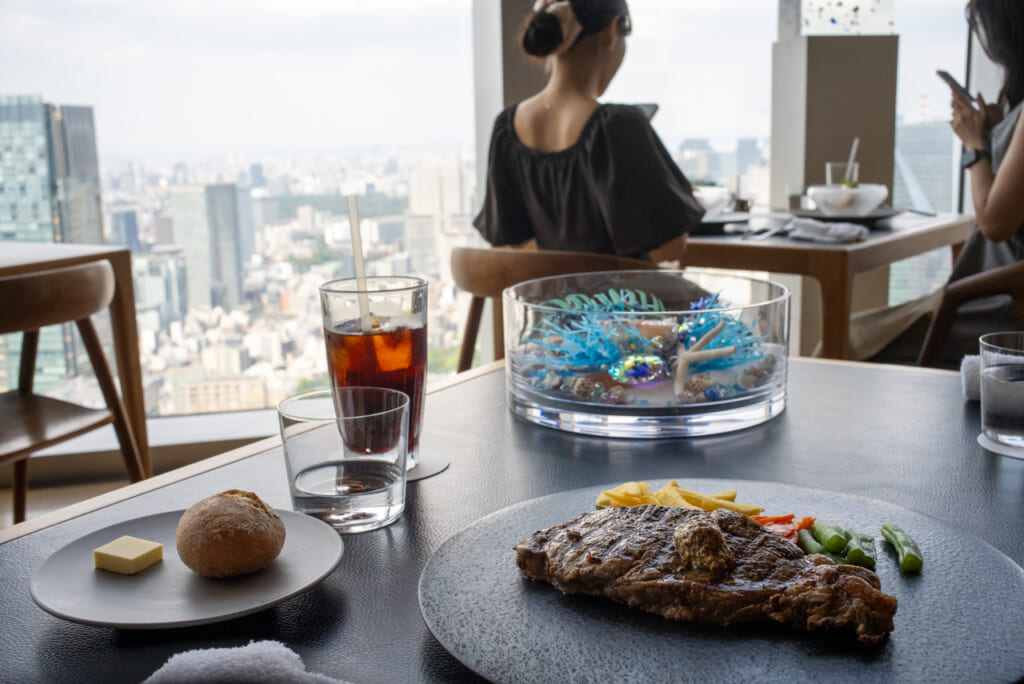
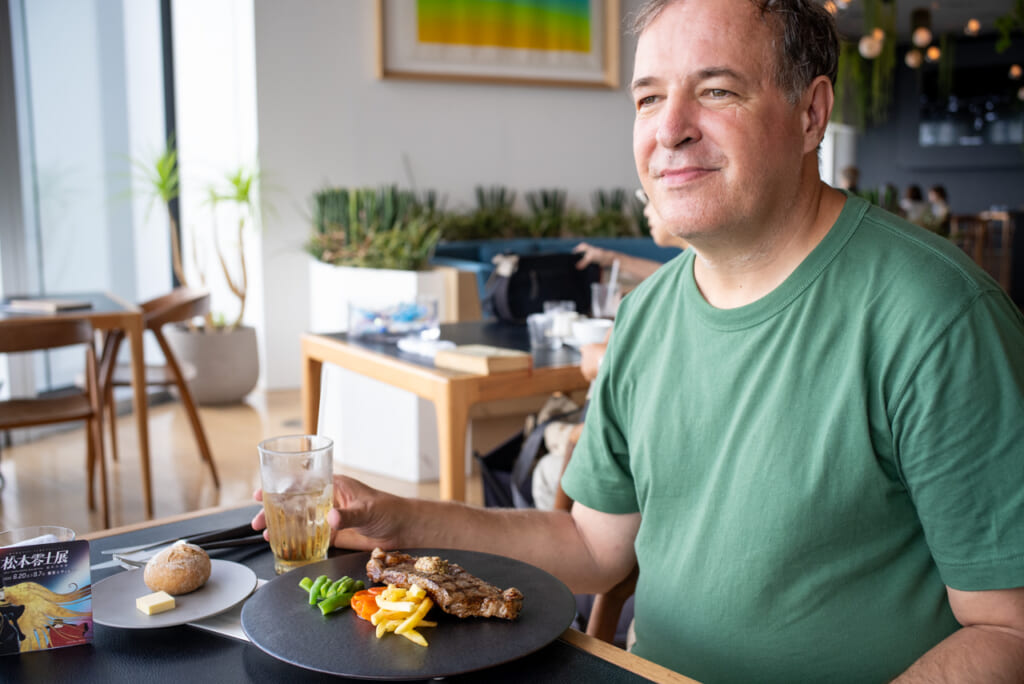
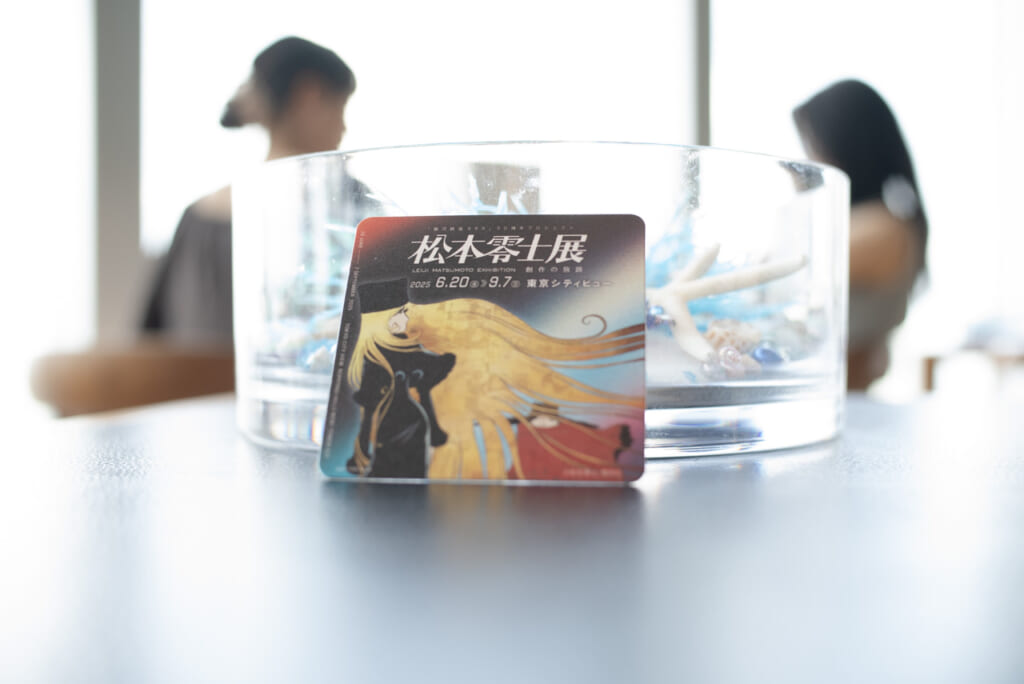
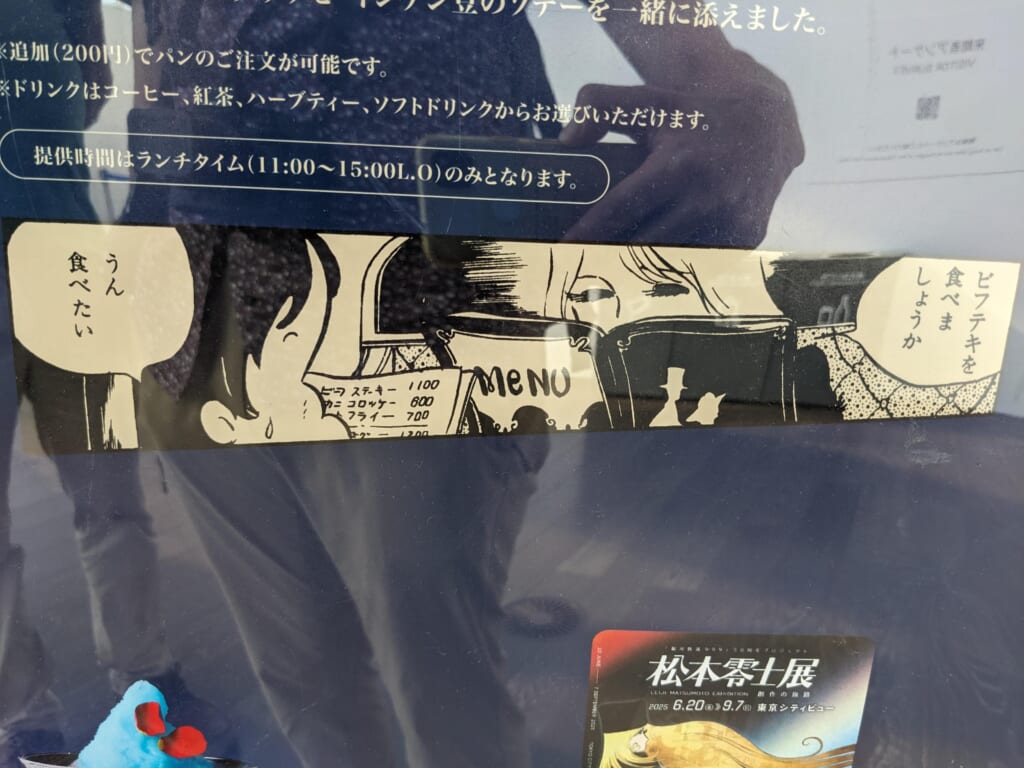
CARLOSWe also had the ‘999 meat’ – a meal that the characters eat in one scene – at a restaurant.
Sometimes the food in anime looks really delicious, you know? Like Heidi’s cheese or the big cartoon meat in Gon, the Stone-Age Boy (はじめ人間ギャートルズ Hajime Ningen Giatrus).
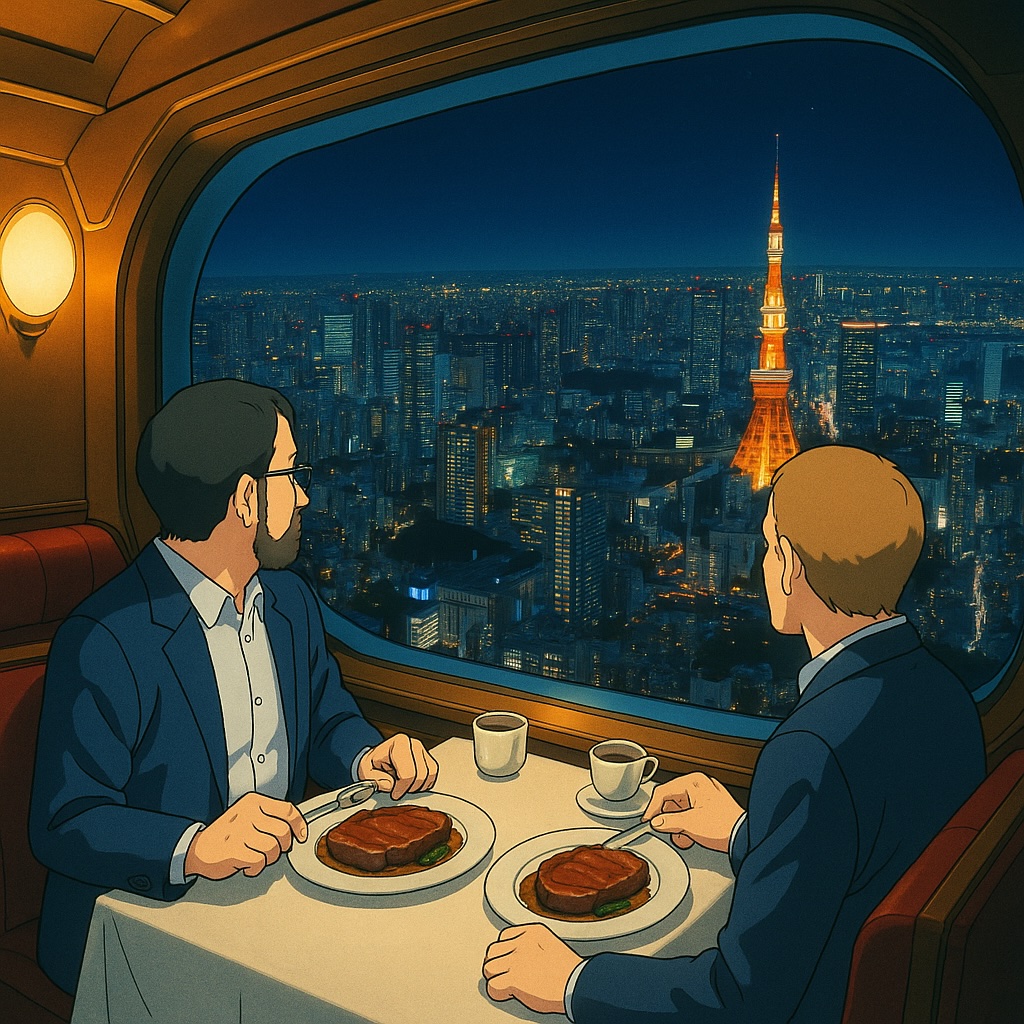
ANDREWIt was extremely tasty, and the view from the 52nd floor of Mori Tower was incredible—like looking out at a sci-fi setting over the vast city.
 CARLOS
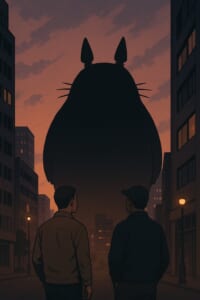
It felt like two boys from different planets looking out at Tokyo from the window of the 999 Express.
ANDREWIndeed.
CARLOSBut why wasn’t the companion a beautiful woman?
ANDREWWe’re the type who stick closer to the original story. More like Night on the Galactic Railroad.