 CARLOS
You have been doing a lot of research recently about Hayao Miyazaki’s film ‘My Neighbor Totoro.’
 ANDREW
That’s right.
CARLOSAre you interested in where Director Miyazaki got his inspiration? Want to go see it?
ANDREWWe can actually go?
CARLOSThe movie sparked efforts to preserve the satoyama, or traditional rural woodlands, in Japan. Local citizens maintain and protect the forest.
ANDREWThat’s an interesting project. I’d like to see it.
CARLOSThen, let’s go!
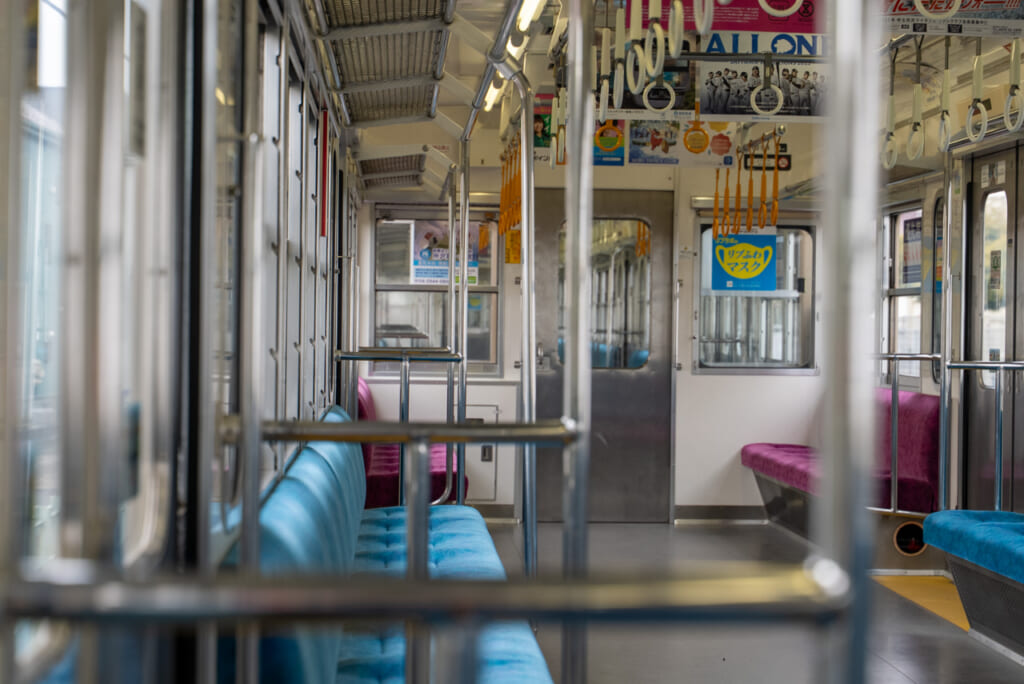
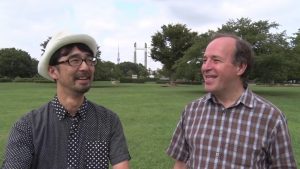
From Shinjuku, you can reach “Totoro’s Forest” in about an hour. Today I organized a trek there.
https://www.totoro.or.jp/
“Totoro’s Forest” refers to citizen-maintained woodland in Tokorozawa, Saitama—landscape that inspired Hayao Miyazaki, the director of My Neighbor Totoro (1988). Local volunteers preserve and open parts of these woodlands as public nature reserves. The areas called “Totoro’s Forest” are scattered around Lake Sayama (a reservoir west of Tokyo), and I’m visiting one of them today. It isn’t literally the film set, but it lets you experience the countryside scenery Miyazaki cherished.
The story begins when we arrive at Seibu-Kyūjō-mae Station (the station by the Seibu Dome baseball stadium, west of Tokyo).
11:50
We pop into a convenience store and set off. I buy a red-bean rice rice ball and a sandwich, plus drinks. A circular route takes you around Lake Sayama and various “Totoro’s Forest” sites.
As soon as we exit the station, there’s a giant-bellied Totoro lying there—well, a big statue/signboard. It will serve as our landmark for the entire walk.
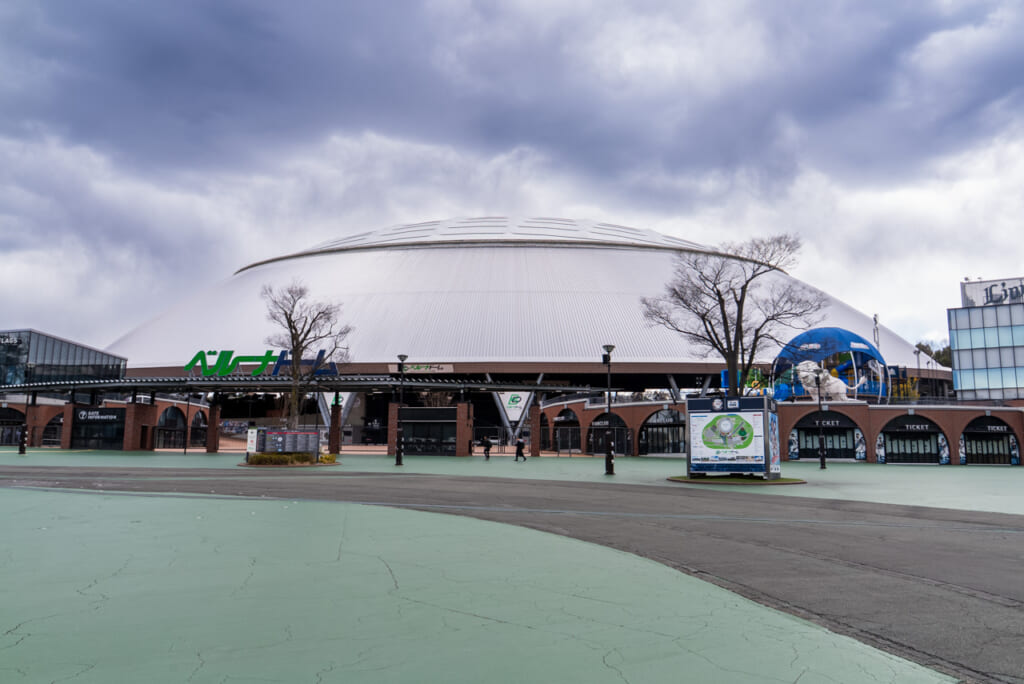
11:53
A Catbus—so it looks to me, anyway—pulls into the Seibu baseball stadium station. (The Catbus is a character in My Neighbor Totoro—a grinning cat that is also a bus.)
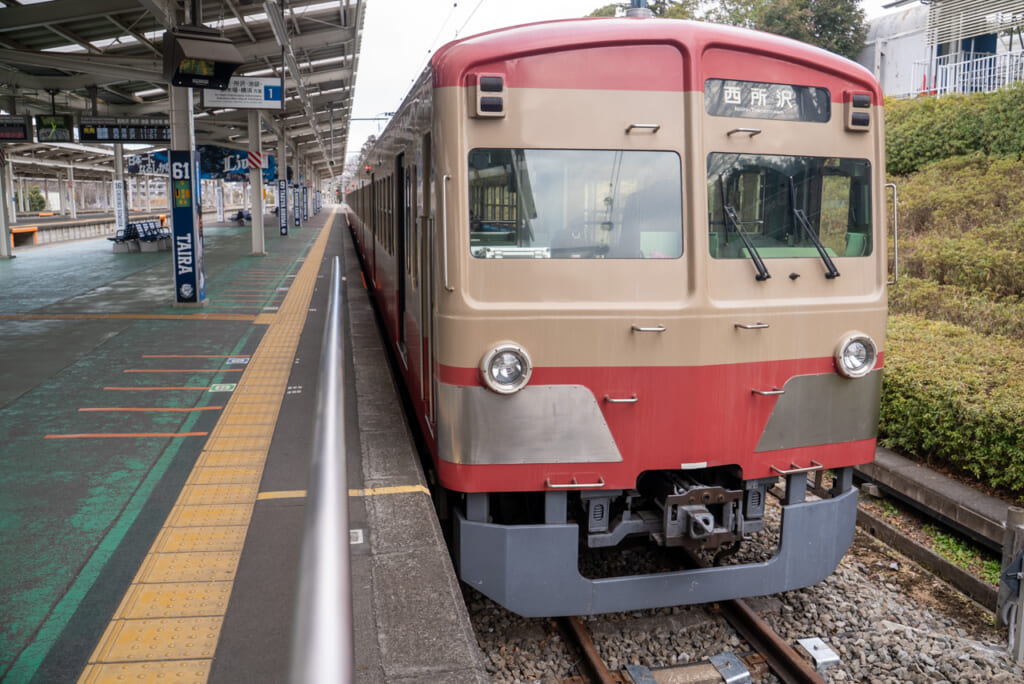
12:19
Leaving the main road for a small settlement, the scenery suddenly turns classically 里山 satoyama: a brook, and a bamboo grove.
A boy rides past on a bicycle. Surely that must be Kanta (another Totoro character).
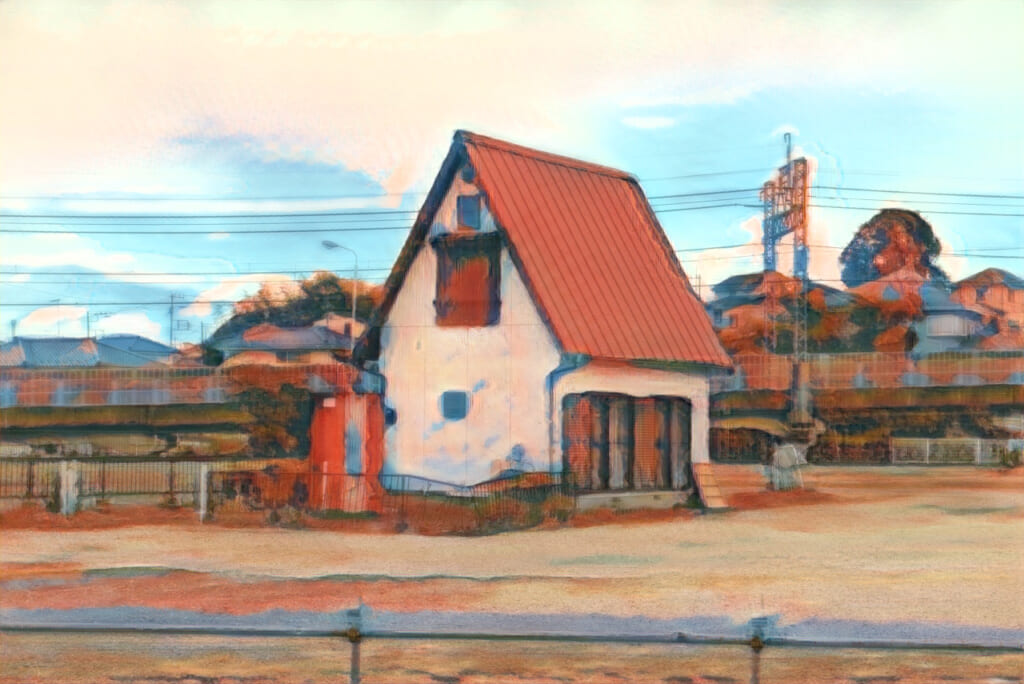
We keep to the roadside and, by the tracks, spot what might be Mei and Satsuki’s house (protagonists from Totoro). We decide to investigate.
I have a feeling strange things are going to happen today—maybe we’ve already been bewitched by tanuki (raccoon dogs) or yōkai (Japanese folk spirits).
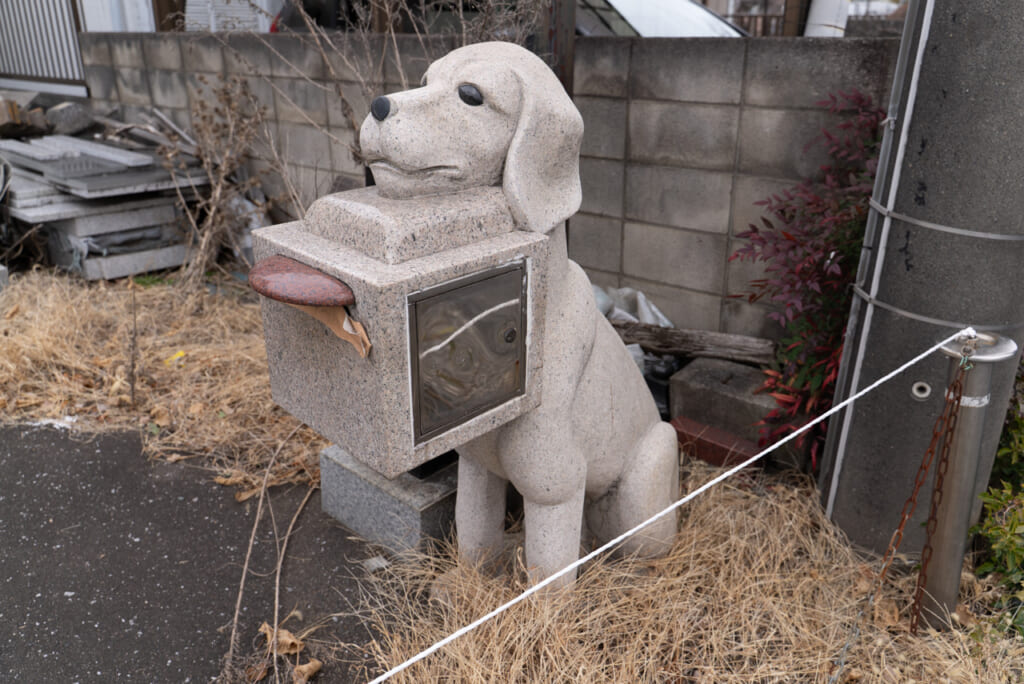
By some mysterious spirit power, a dog has been transformed into a mailbox—at least, that’s how it looks.
From behind a house comes a voice singing odd religious music; the next instant, a graveyard appears.
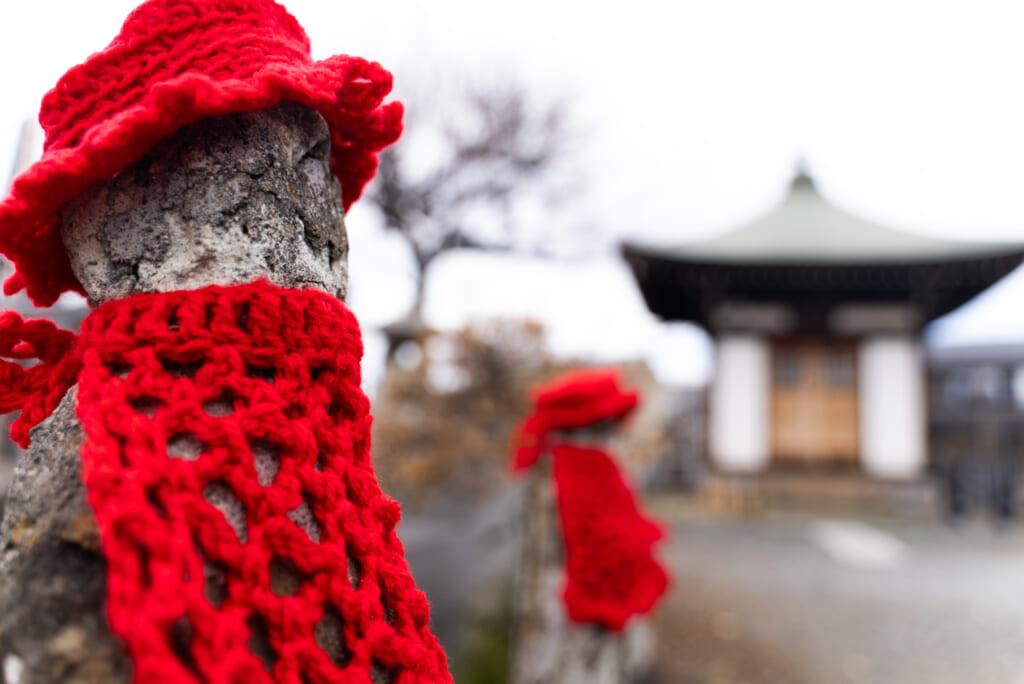
We take a look at 六斎堂 Rokusaidō (a small local hall/shrine) and turn back.
12:15
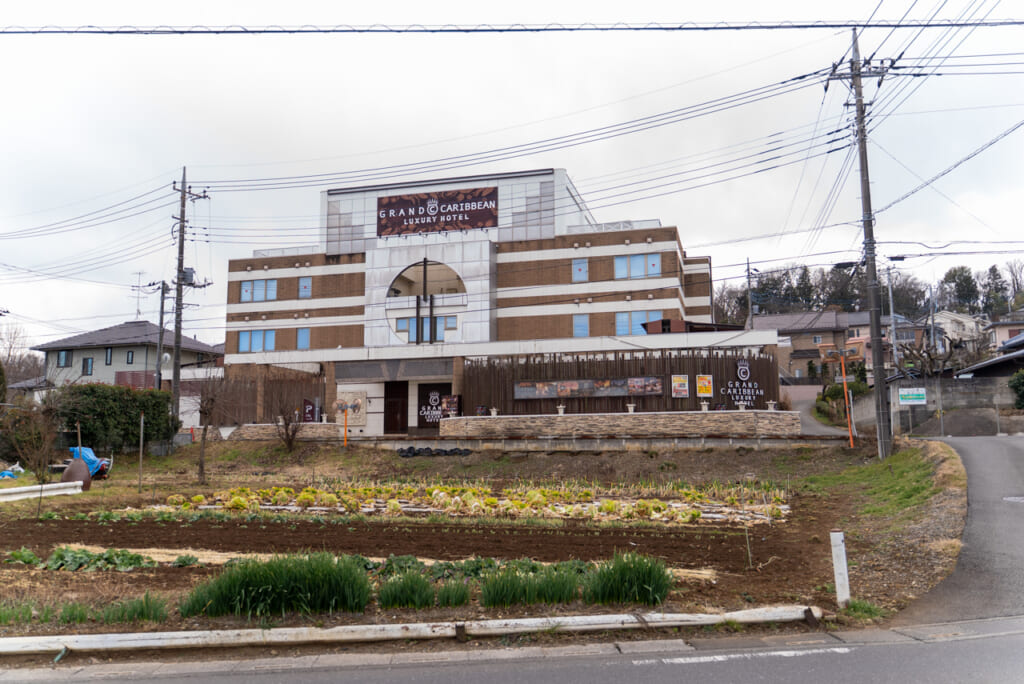
Suddenly, the luxury hotel “Grand Caribbean” comes into view. I ask Andrew what on earth the Caribbean has to do with Totoro.
“Nothing,” he says.
So far, nothing overtly Totoro has presented itself, but Andrew’s in cosplay, so let’s call it even.
12:30
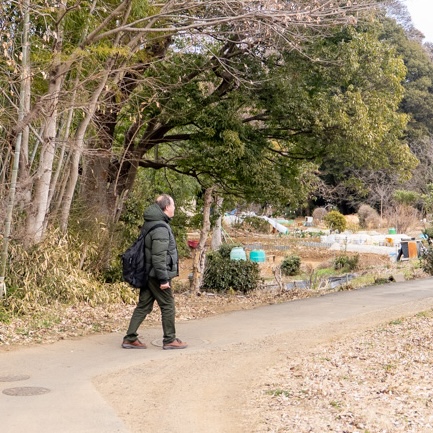
At a fork we finally find a waymarker for Totoro’s Forest No. 151—reassuring.
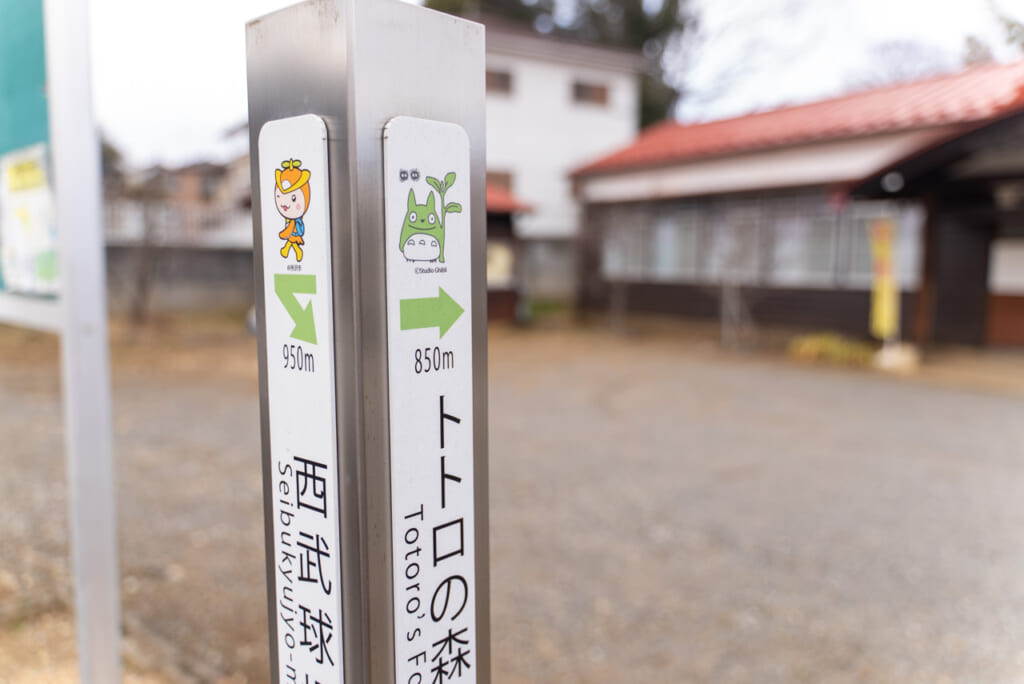
Right there we bump into a woman—around sixty, she says she’s come down from the hills. Her friends don’t like this kind of walking, but she hikes often and reached here from home in under an hour.
She tells us that farther up is Horiguchi Tenman-gū (a Tenjin shrine dedicated to learning) and that she saw a blue bird nearby: a Red-flanked Bluetail (ruribitaki)—in Japan sometimes nicknamed a “bluebird of happiness.”
When I say, “They say it brings luck,” she seems unsure. Maybe Maeterlinck’s The Blue Bird (L’Oiseau bleu) is roosting up there.
When I ask her name and try to take a photo, she strongly refuses. Perhaps she was a yōkai after all.
12:33
An apartment building is named “Merci.” Why Merci? Perhaps we are being sent into this forest as offerings—merci beaucoup.
12:37
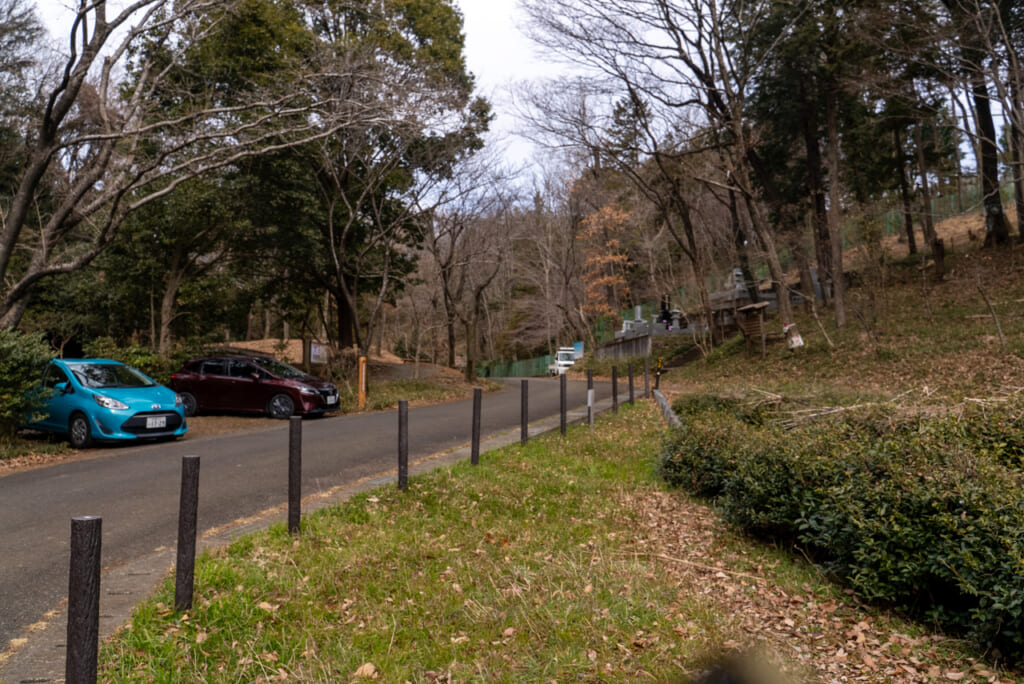
A man sits in his car with a saxophone.
Why? What kind of yōkai is this?
Maybe it’s too loud to practice at home—or he’s practicing in secret. Or is he trying to summon something not of this world?
A fanfare blares for us.
12:39
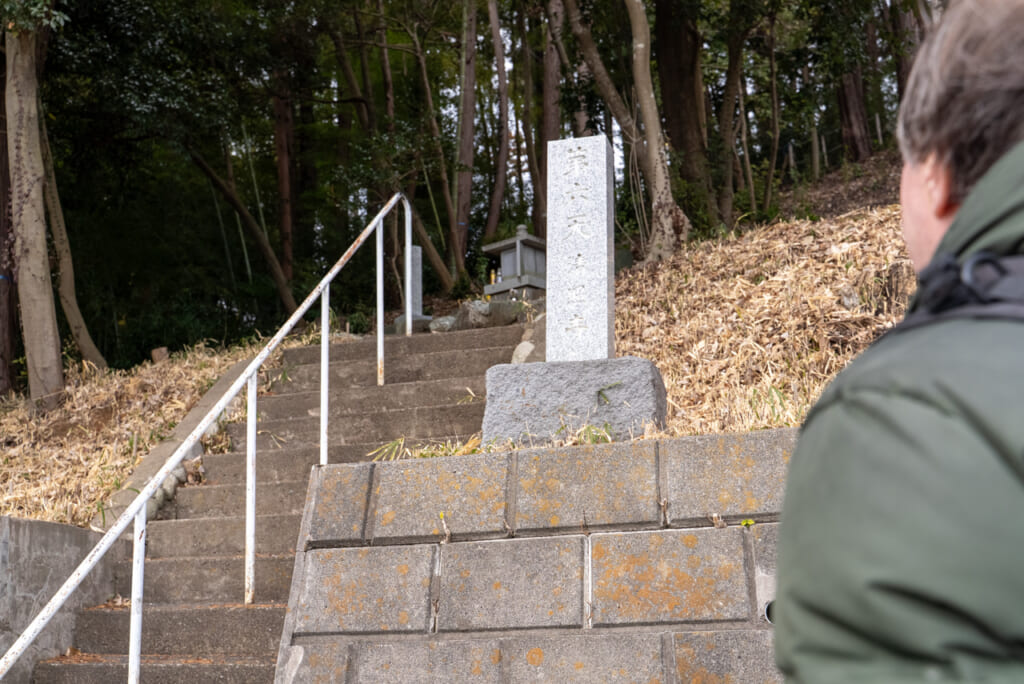
Even after we leave, the saxophone practice continues. Eerie.
I ask Andrew about the symbolism of the saxophone. He says, “It’s a phallus.” I disagree.
There’s a man-made biotope here—a little restored wetland—something of that sort.
12:43
At last we reach the entrance to a mountain path.
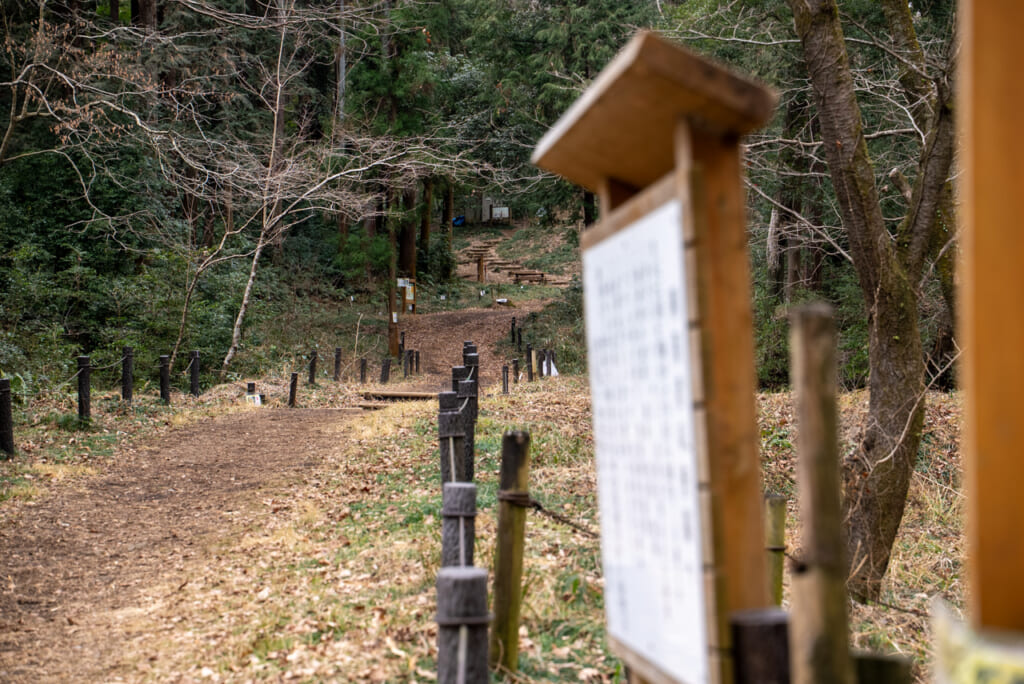
“Now this finally looks like a Totoro-style forest,” Andrew says.
A crow mews like a cat—are we meant to think of the Catbus?
A school bell goes kin-kon-kan-kon in the distance; it feels like the start of another chapter.
12:50
At the top of the hill, we turn right. A sign says it’s 1.2 km to Lake Sayama.
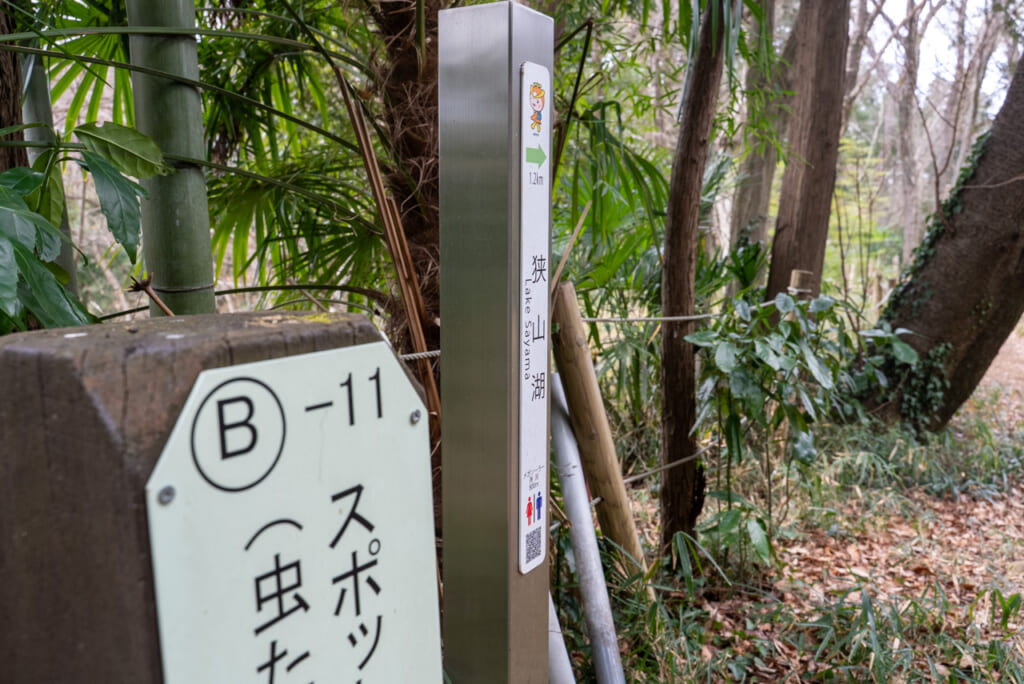
Totoro’s Forest No. 45. In the 1970s this area was divided into small plots for sale; from that state of abandonment (the Japanese text says “abduction,” likely a typo), volunteers have been working to restore it to woodland.
We enter a spot called “Forest of Insects.” Naturally, there are no insects; only crows calling. No people, either.
13:00
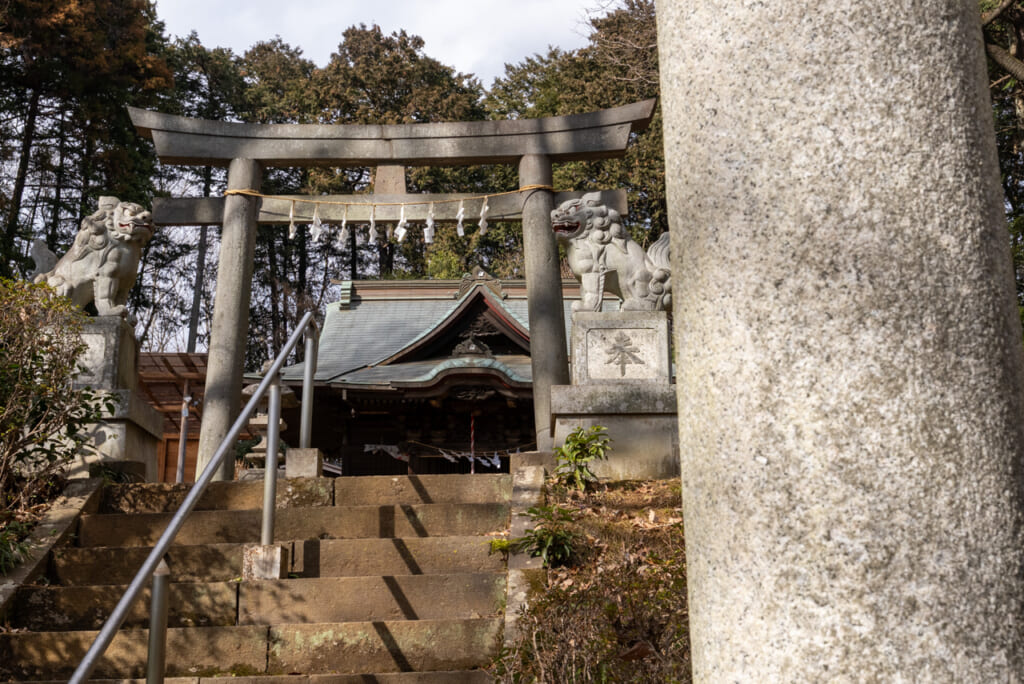
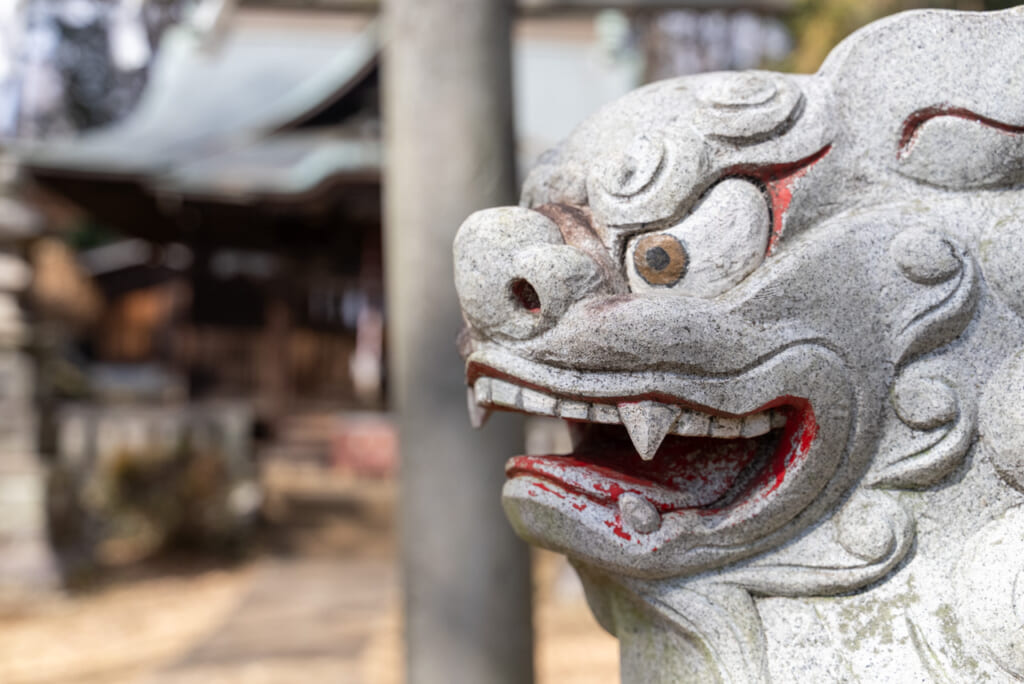
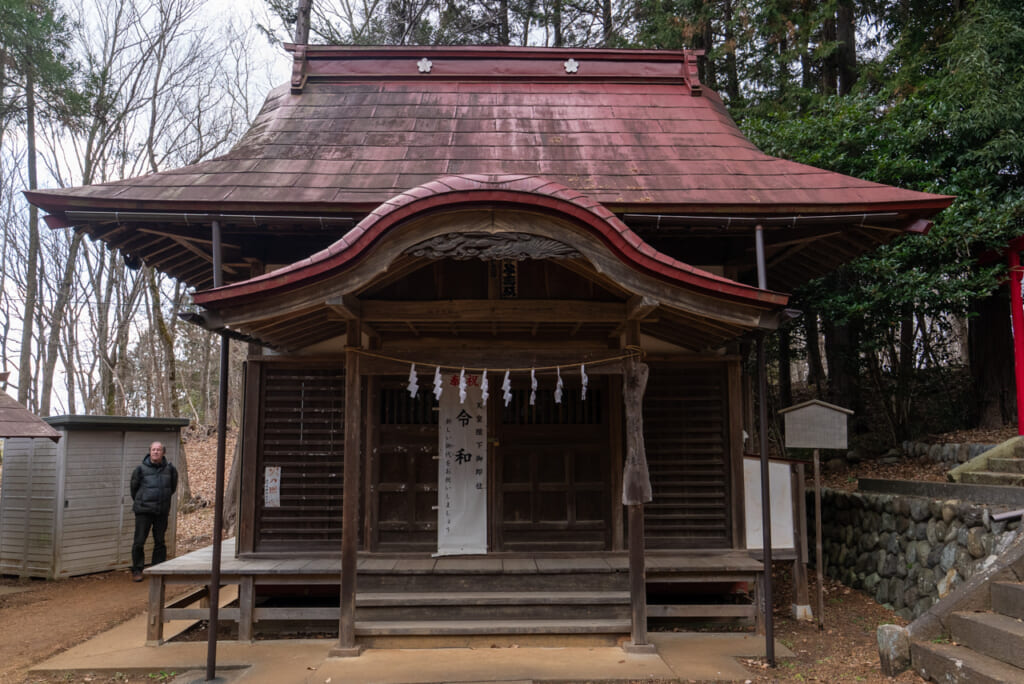
We reach 堀口天満神社 Horiguchi Tenman Shrine (also called Horiguchi Tenman-gū; Tenjin shrines are dedicated to Sugawara no Michizane, patron of learning). There are two buildings: one with a red roof, the other green. Both are elaborately made, unusually grand for a small local shrine—not a major tourist site or a famed historic building, yet impressive.
Here we eat the bread and red-bean rice ball we bought.
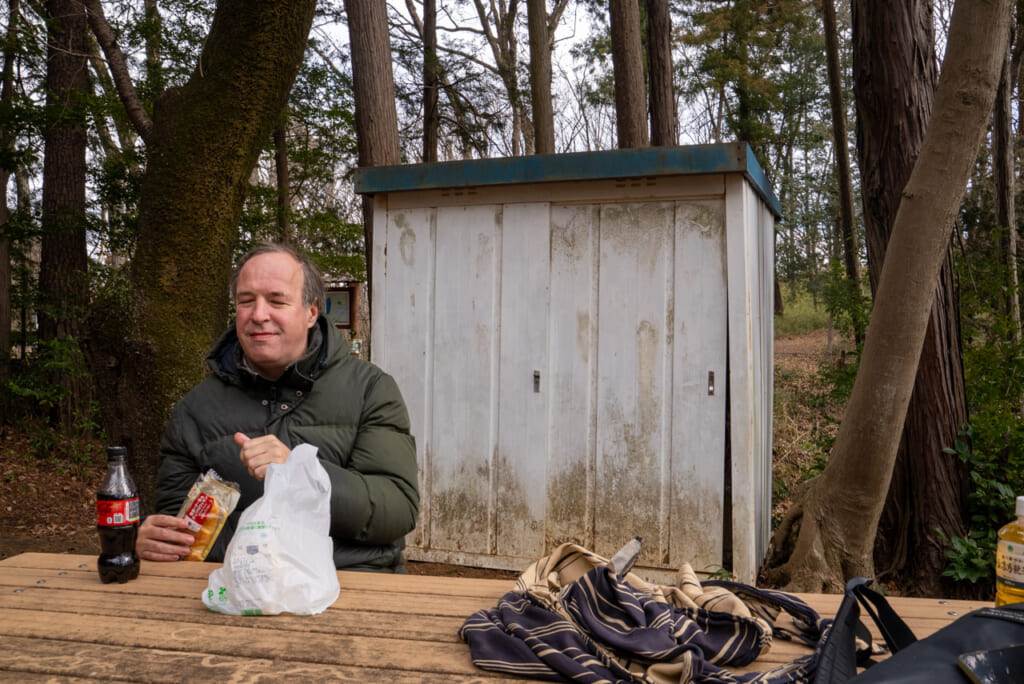
Andrew has two egg sandwiches. Today’s Coca-Cola is zero-calorie—he seems to think that’s “healthy.”
13:20
Perhaps because the Japan Air Self-Defense Force Iruma Air Base is nearby, planes keep roaring overhead, the sound receding again and again.
13:22
Out of nowhere, Andrew says he’s reminded of Night of the Living Dead.
12:45
A school chime rings out: kin-kōn-kan-kōn.
13:25
Again the same chime. A nearby school, perhaps—though it doesn’t feel like one should be so close. The effect is eerie, like in a horror film.
13:45
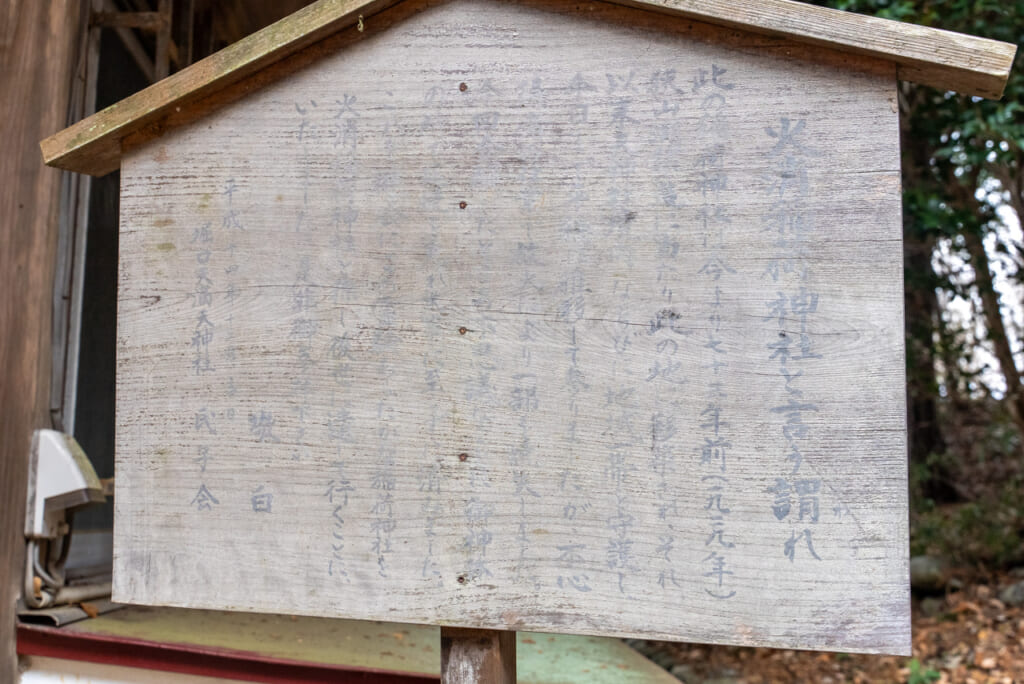
We finish our break and start walking again. This place is apparently called the “Fire-Extinguishing Shrine.” I read about the origin of that name.
13:52
We meet a man here to photograph ルリビタキ the Red-flanked Bluetail (ruribitaki).
He usually photographs kingfishers, he says, but today he’s after this “bluebird of happiness”—a very rare migratory bird that appears only in this season.
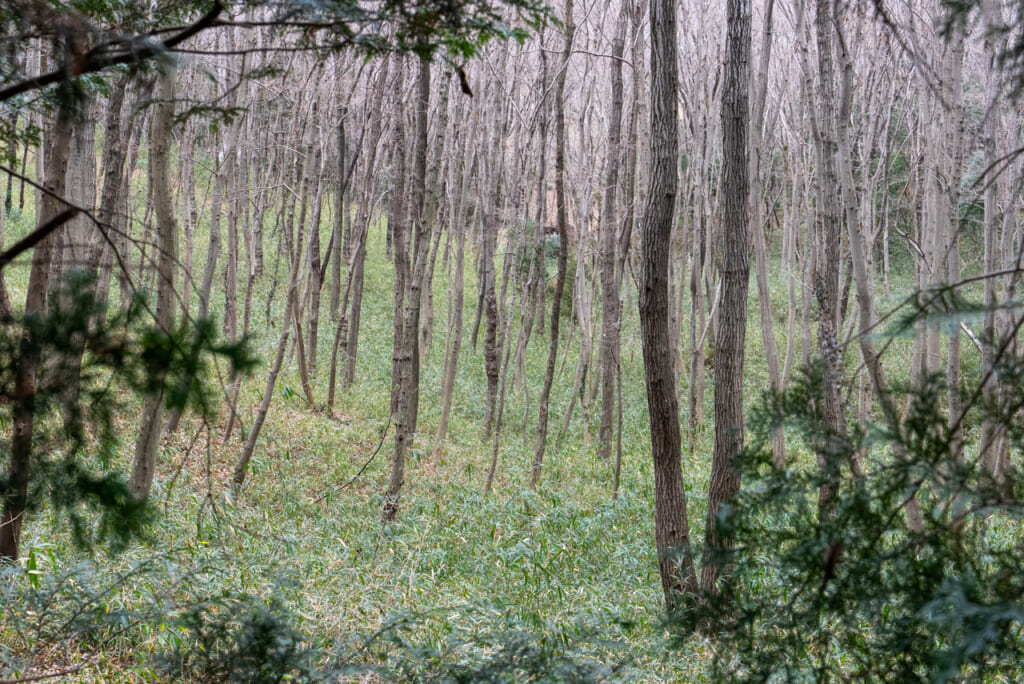
Even as he explains, we hear something walking in the grass. We peer carefully, but… it isn’t blue at all.
14:00
There’s a pet cemetery here. Inevitably we start talking about Stephen King.
14:08
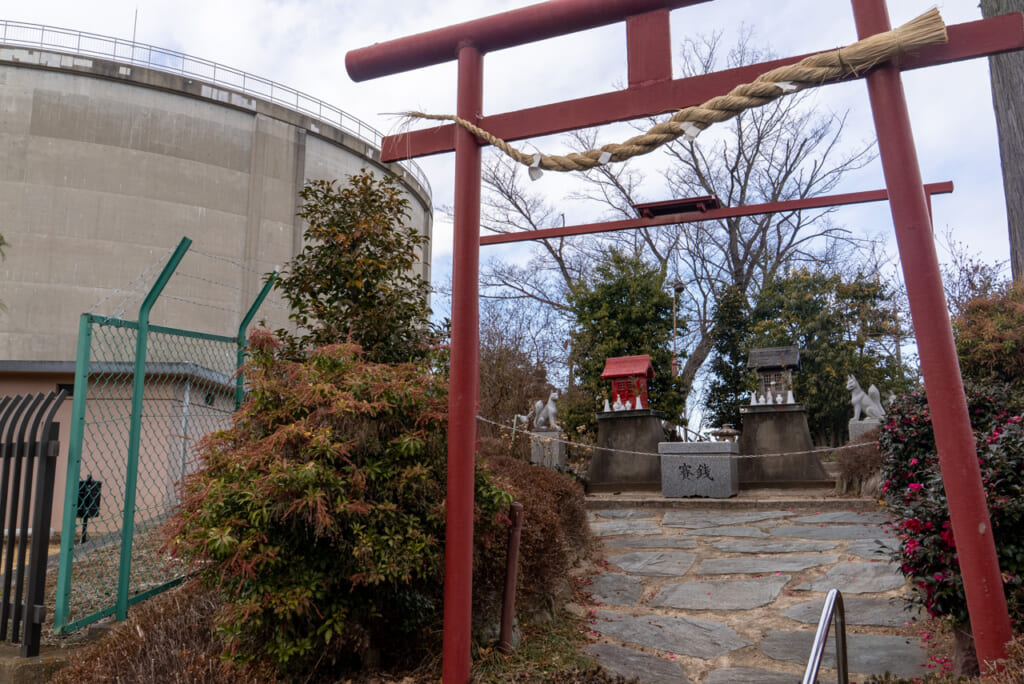
We leave the forest and see a large water tank. We’ve nearly reached the levee. To the right lies a mega-solar installation.
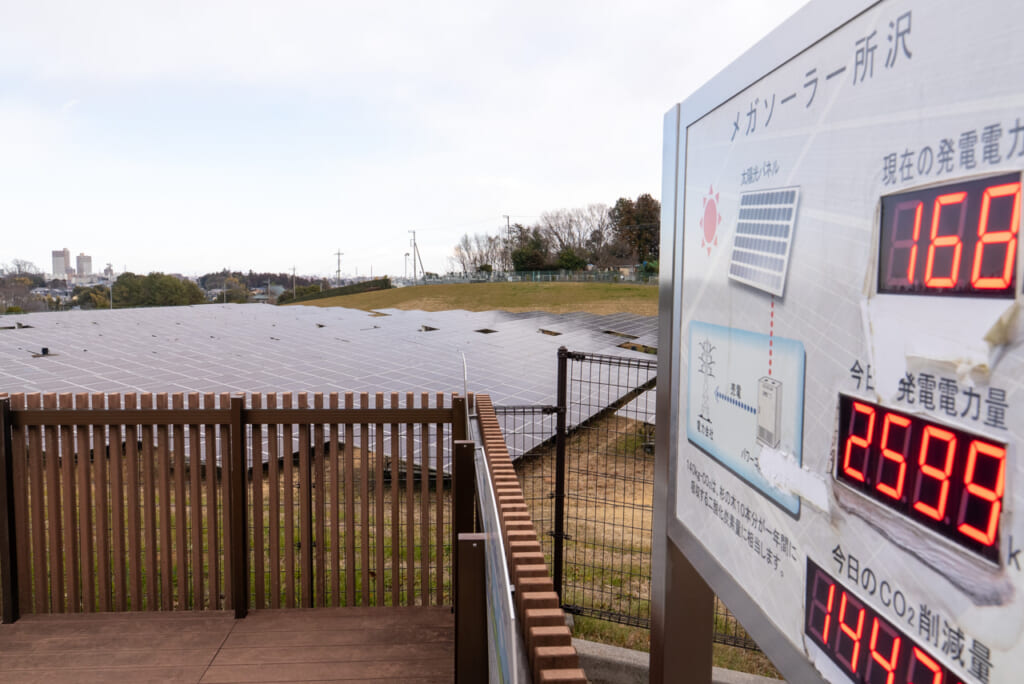
What irony: next to volunteers planting trees to re-create forest, other trees have been felled for solar panels.
14:12
Fighter jets are training overhead.
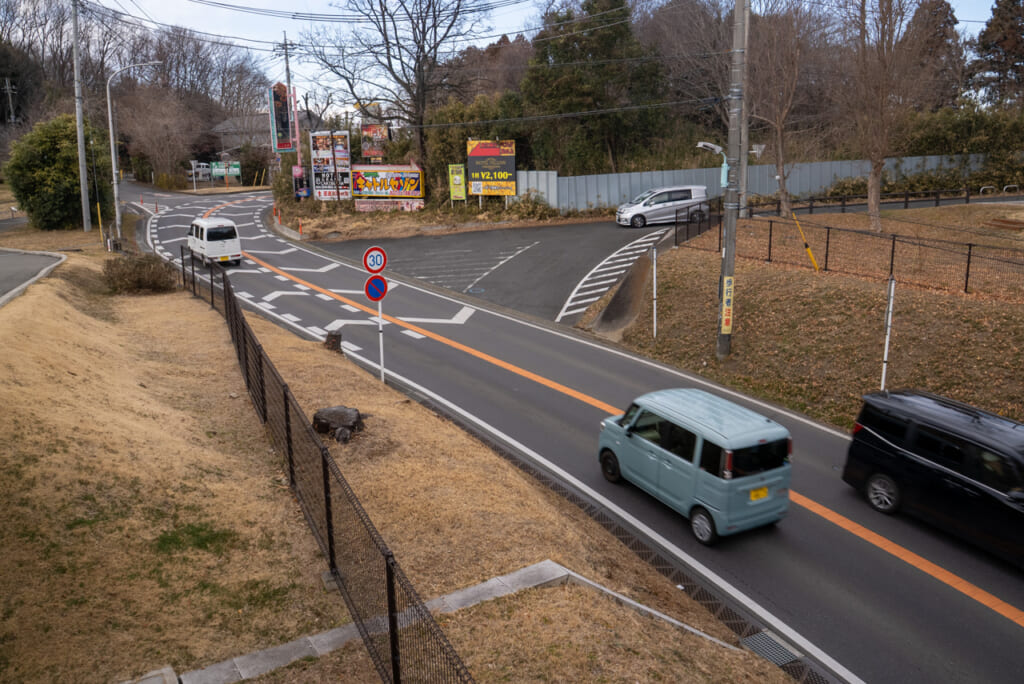
As the lake comes into sight, there’s another love hotel. Its name: Quatre Saisons—French for “Four Seasons.”
Our trek began by a “Caribbean.” Here, another foreign name—this time French, Quatre Saisons. Locals whisper that inside such places, night after night, humans turn into animals.
14:21
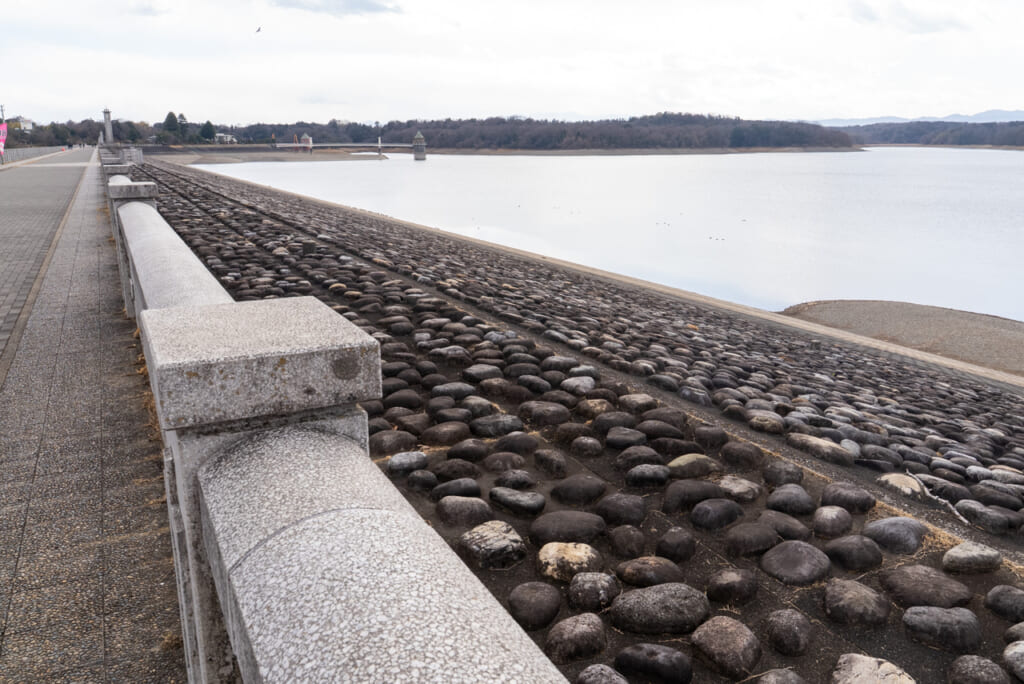
We reach the top of the levee overlooking Lake Sayama.
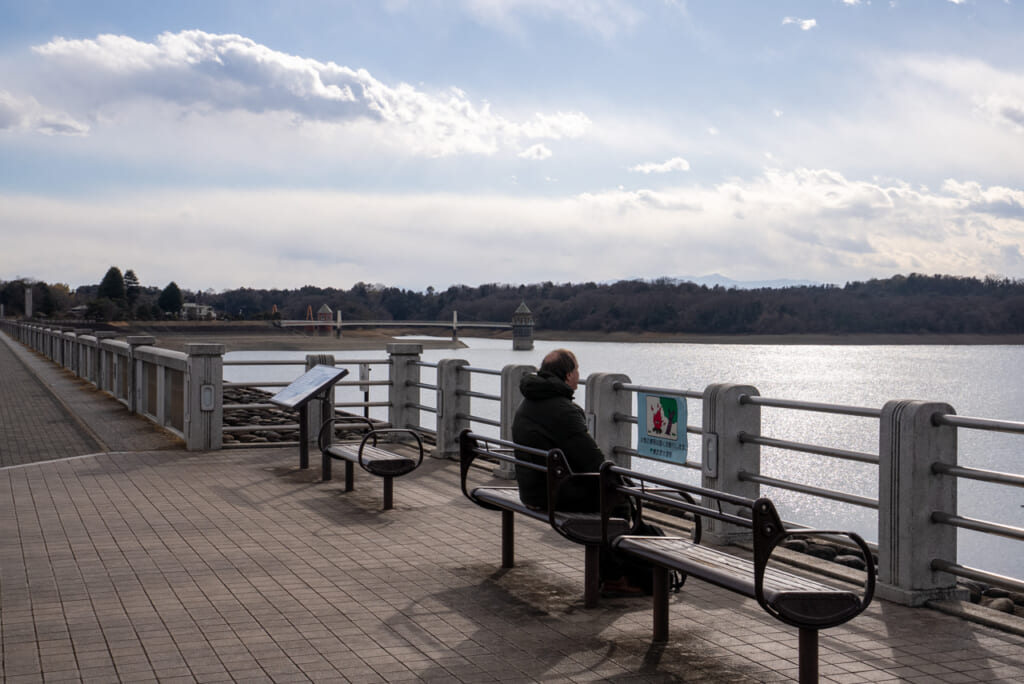
Andrew thinks we should have come in summer. If you want to feel the world of My Neighbor Totoro, maybe the rainy season would be ideal.
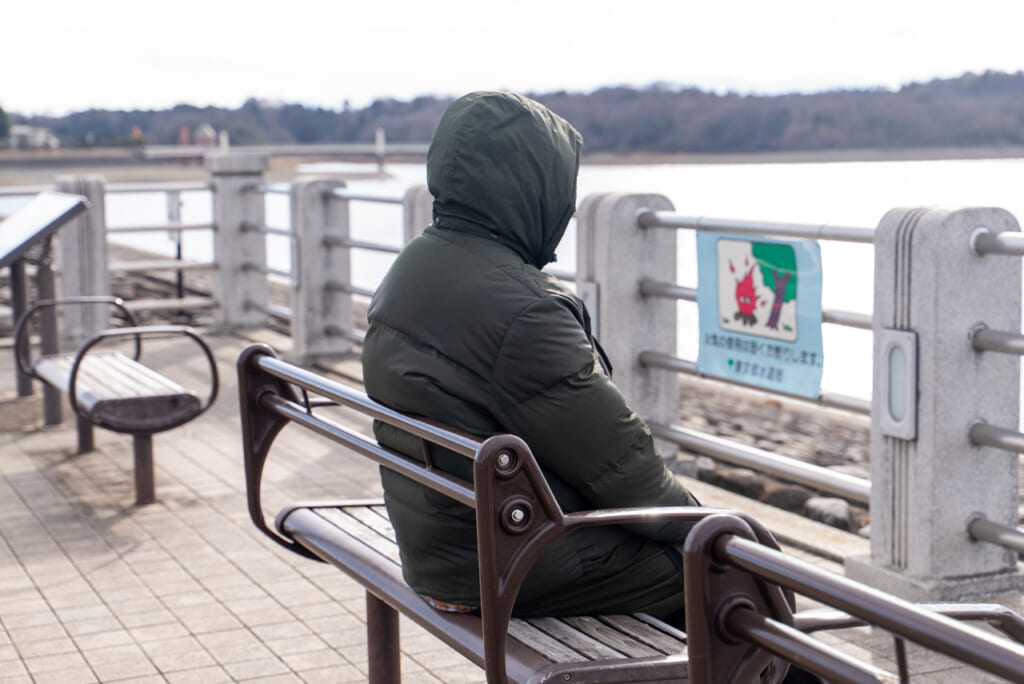
14:38
We ask an older couple out birdwatching about the bluetail. They explain that at this season it stops here briefly on migration, then leaves rather quickly. Thanks to their detailed explanation we learn much, but in the end we don’t see one. A pity.
14:44
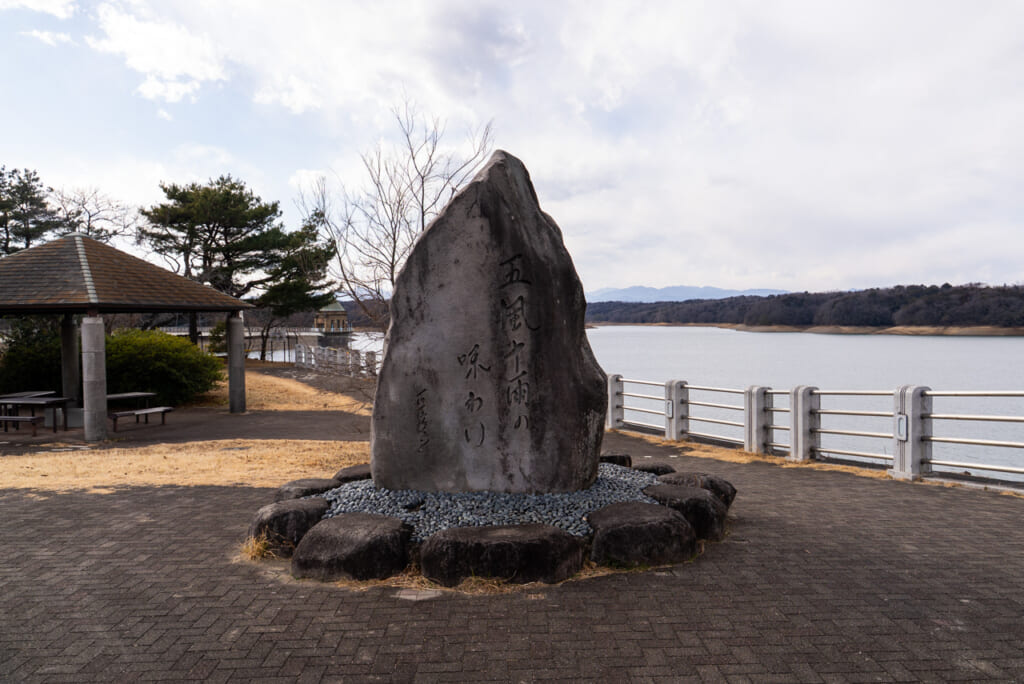
Crossing the levee, we come to a monument marking Lake Sayama’s selection among the “Top 100 Dam Lakes of Japan.”
From behind us comes the sound of an instrument—this time a trumpet. Not the saxophone we heard earlier.
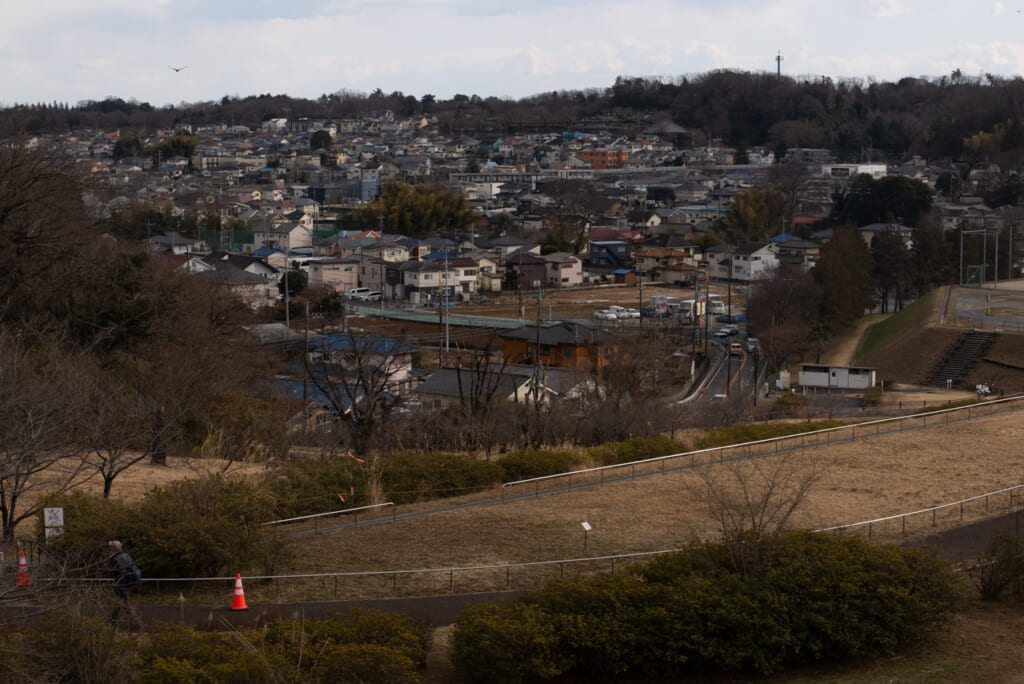
When I ask Andrew about the symbolism of the trumpet, he just says, “No idea.” To me, though, this one is even more of a phallus symbol.
15:00
Leaving the dam’s embankment, we come out onto a wide road.
By a bulletin board stands another couple. Birdwatching is their hobby, they say. They’ve even gone as far as Ibaraki to see swans. Did they come here for the bluetail? Not exactly, they tell us. Perhaps the “bluebird of happiness” is something you encounter only by chance.
Our talk drifts to Totoro. The lady once worked in healthcare and knows the area well. Before the war, she says, there were tuberculosis sanatoria around Kiyose, and that imagery may also have influenced Miyazaki.
15:11
Sayamasan Fudō-ji Temple 狭山山不動寺 . In the background, Totoro’s belly looms—another landmark visible from many points along the route. It has guided us well.
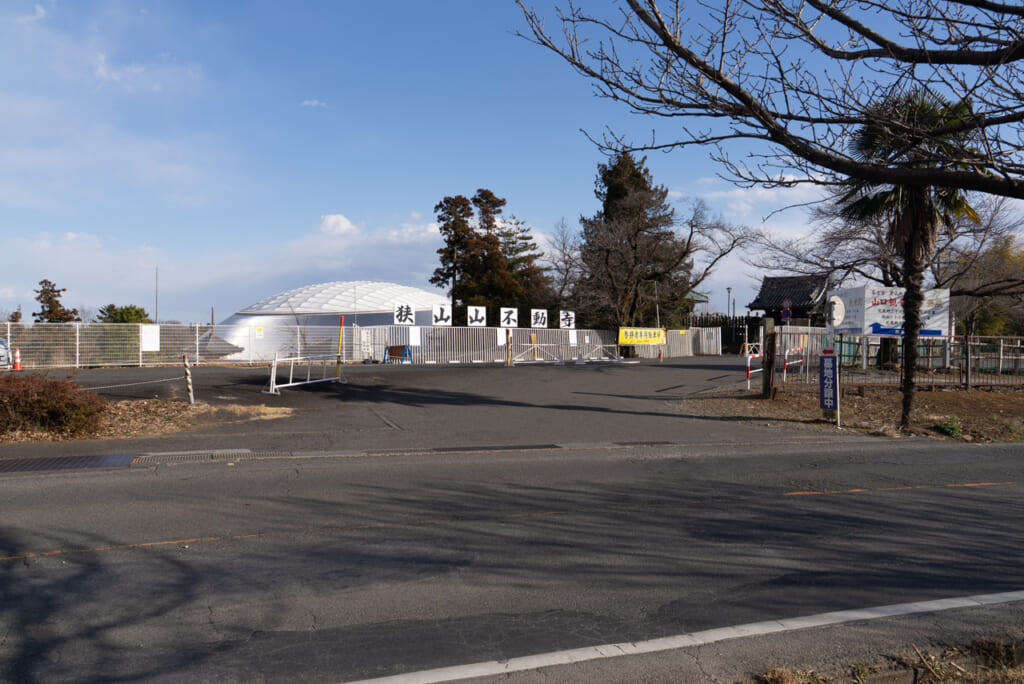
15:17
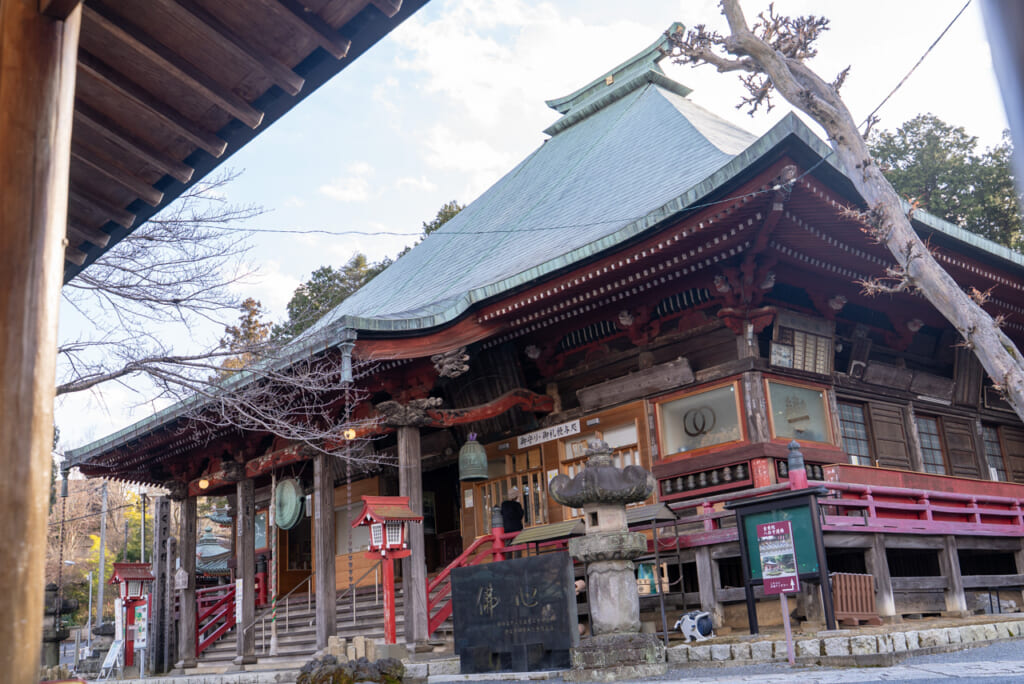
We arrive at Yamaguchi Kannon (Konjō-in Hōkō-ji, a Buddhist temple dedicated to Kannon/Avalokiteśvara).
The steep roof of the main hall is striking, clouds floating rapidly across the sky.
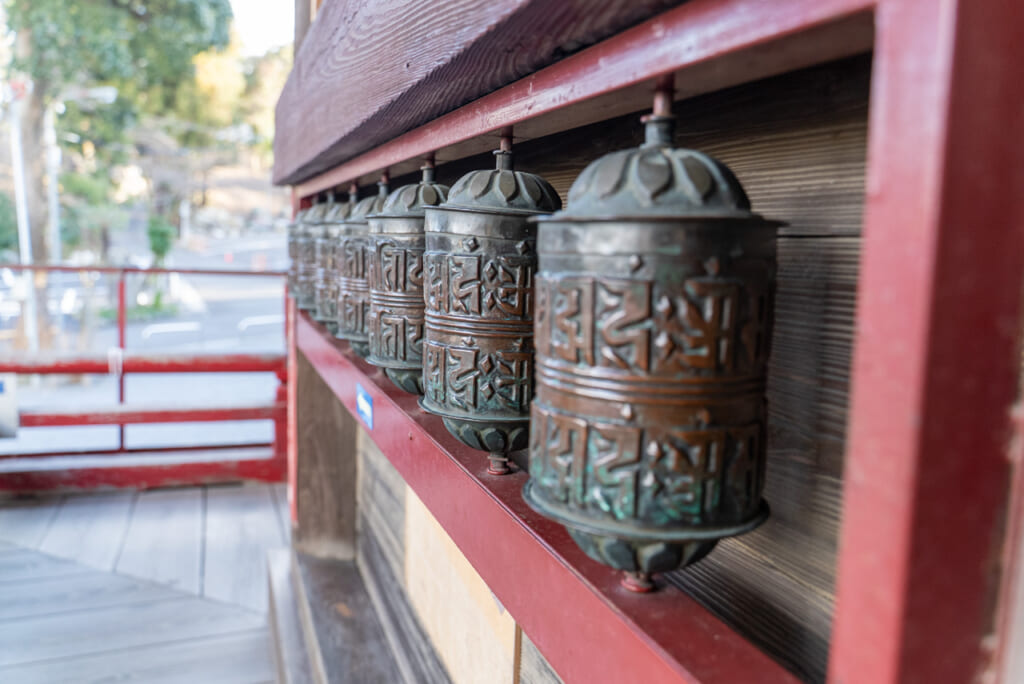
From behind the temple comes a woman spinning a mani wheel (a Tibetan Buddhist-style prayer wheel). Brown cap, sneakers, a plastic bag and shopping tote—this act of devotion seems part of her everyday life.
There’s a statue of the Thousand-Armed Kannon. The custom, we learn, is to chant a mantra three times: On Basara Tarama Kiriku.
We spin the prayer wheels and walk around to the back of the hall. Through a small peephole you can glimpse the Thousand-Armed Kannon.
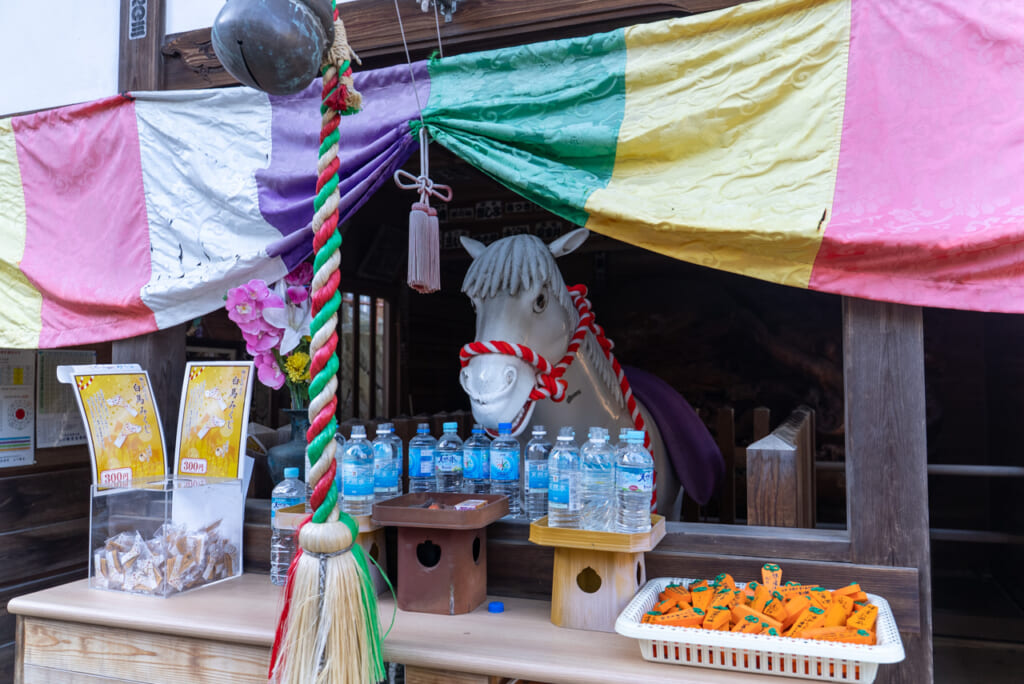
Out front there’s a legend: the medieval samurai general Nitta Yoshisada once dedicated a horse here, and that horse is venerated; the temple is said to grant good fortune in contests.
With the Kannon, the sacred horse, and even a pond, the grounds feel a bit like a miniature amusement park. Spinning the prayer wheels is fun in itself.
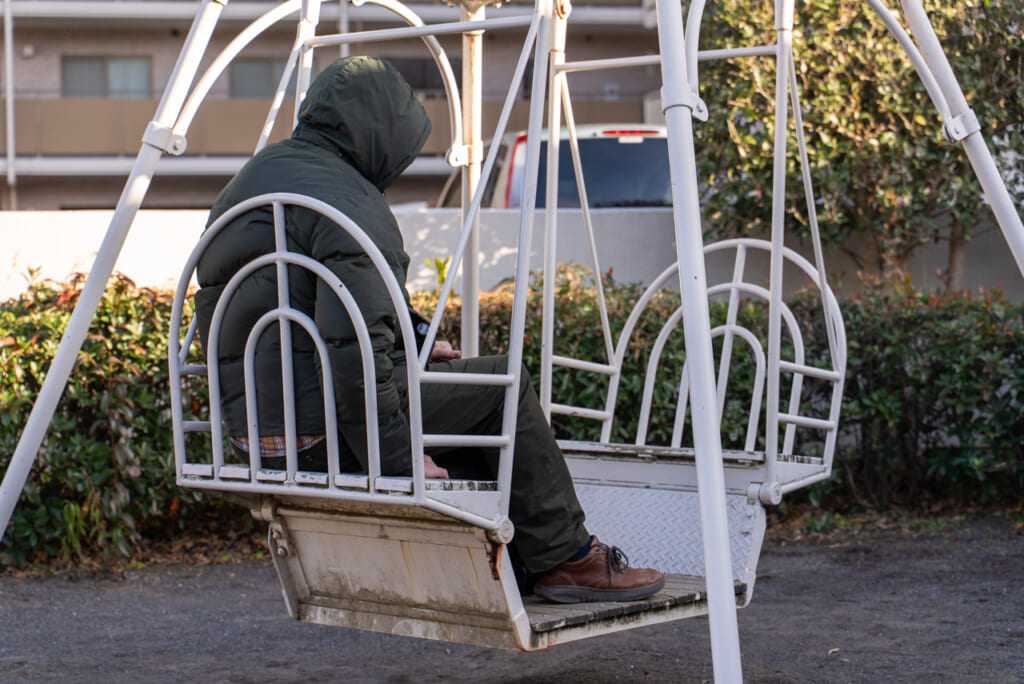
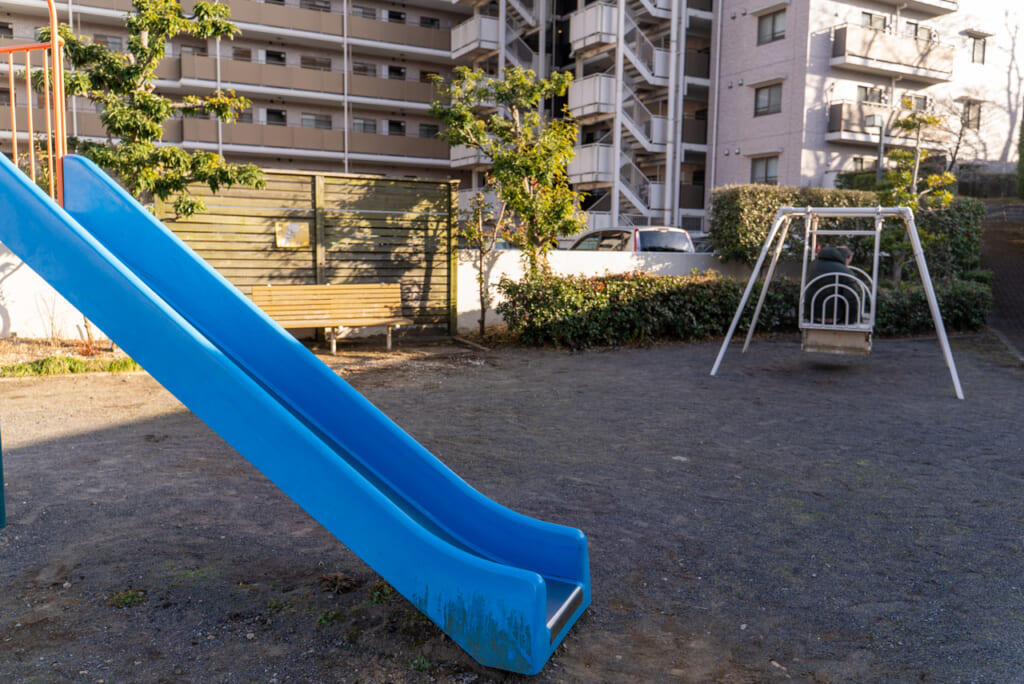
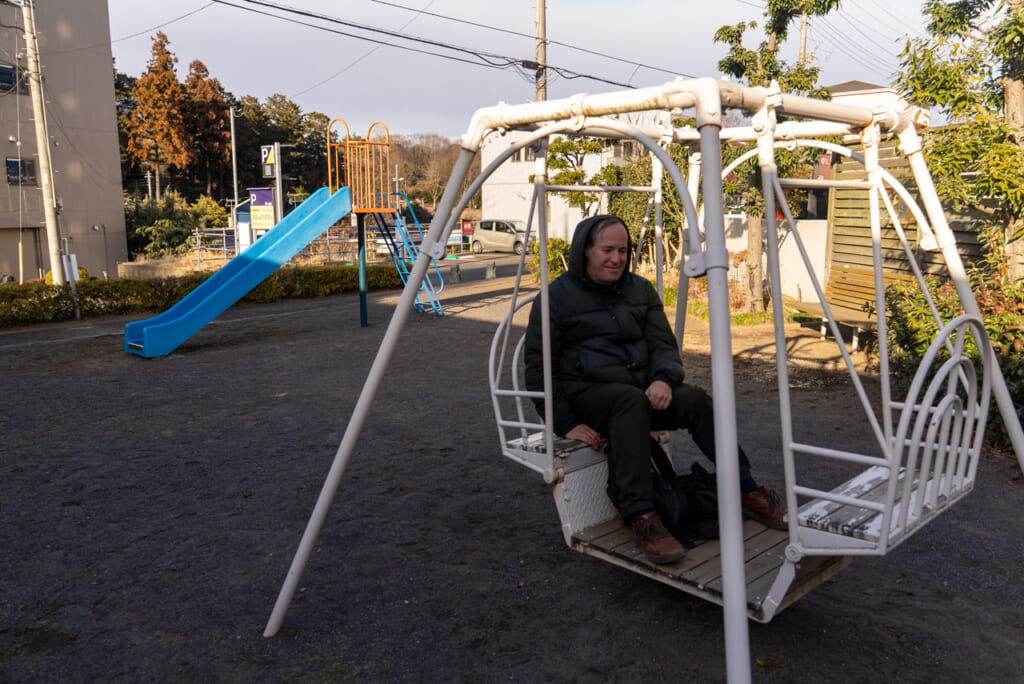
Andrew gets on a swing in a tiny park nearby.
On the way out, a sign reads: “Thank you for your visit.” Literally, it says otsukaresama deshita, a phrase that in Japanese means “thank you for your effort” or “you must be tired.” Odd wording for a religious site—after all, we’re here seeking worldly benefits.
15:45
We reach the intersection in front of the Seibu Dome.
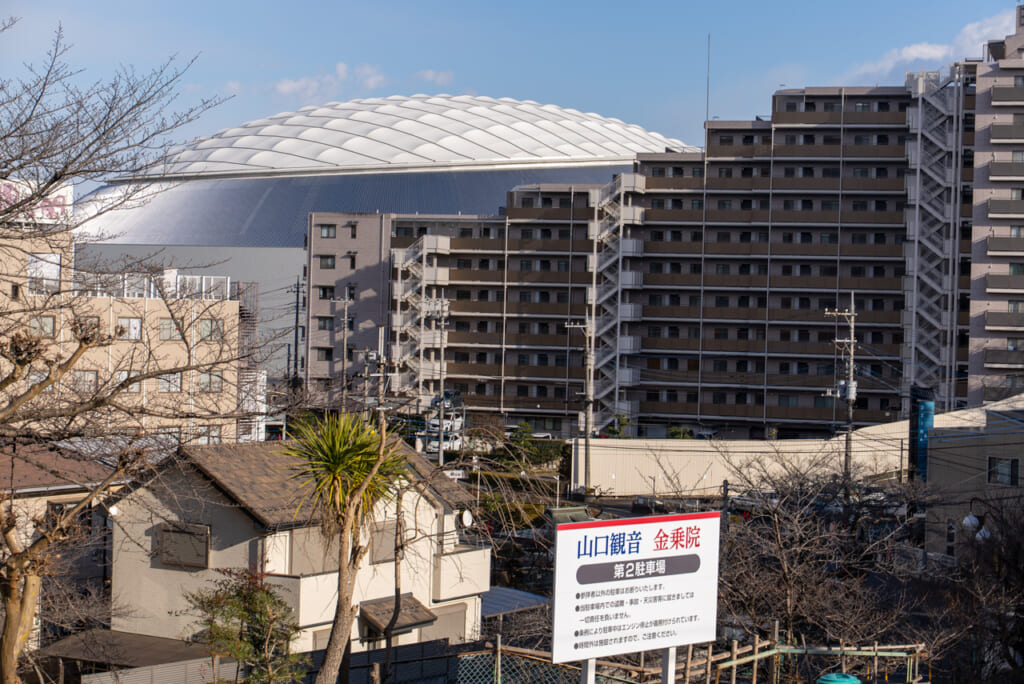
15:57
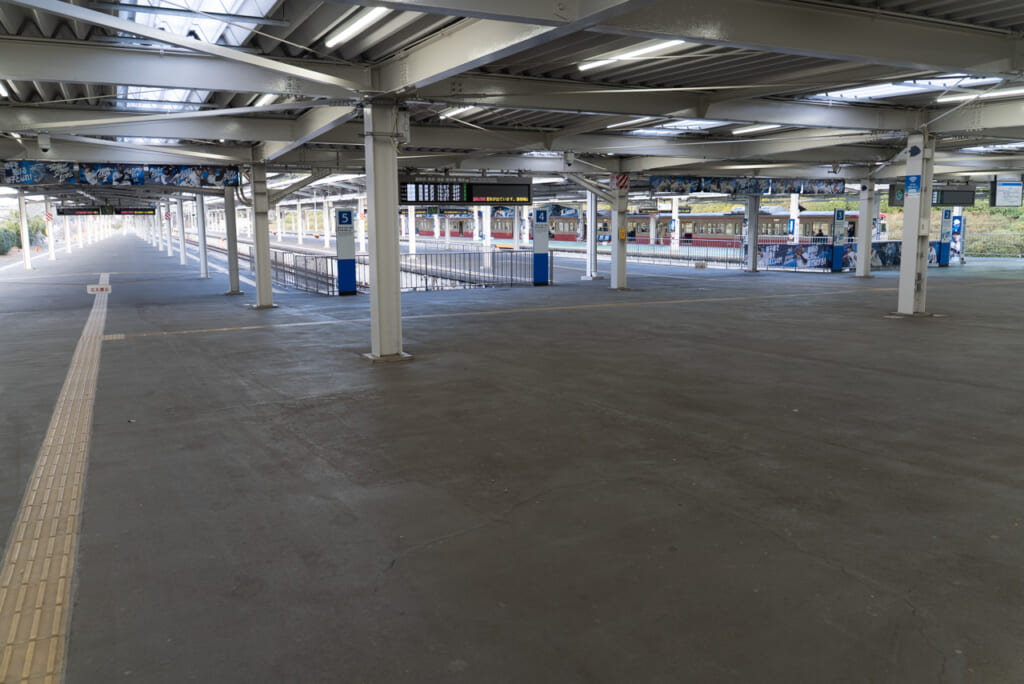
We enter the station and use the restroom. The train is just about to depart, and soon we’re on our way to Nishi-Tokorozawa.
Looking out the window and reflecting on the trek, Andrew says,
“The landscape looks a lot like around my home in Ascot.”
Perhaps this man is the real Totoro.
Come to think of it, Tokorozawa Station’s departure chime is the Totoro theme. The ending melody plays as we head home.
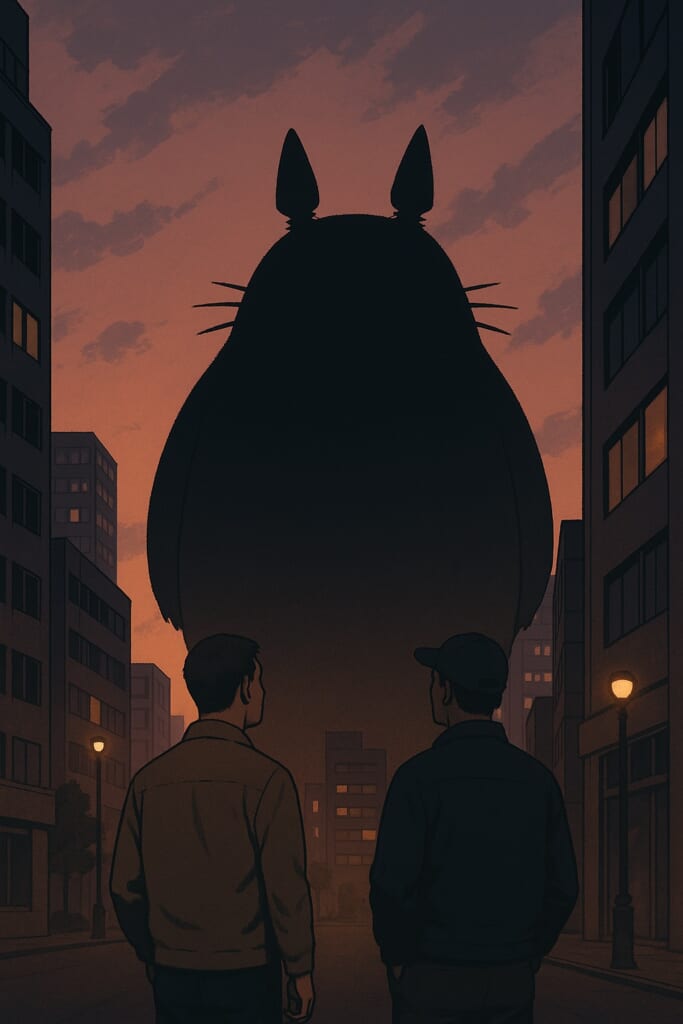
Reflections on the Trail
CARLOSStrolling through the woods was fun on its own, but with a dam lake, shrines, and temples thrown in, the course turned out surprisingly entertaining. And since “Totoro’s Forest” comes with multiple model routes to choose from, why not unlock one more trekking quest for yourself?
ANDREWI think that it would be best to go in spring, though! Hopefully we can go back again in that season.